RentAHuman: are we really descending into AI dystopia?
No, artificial intelligence cannot ‘exploit’ human labour.
Want unlimited, ad-free access? Become a spiked supporter.
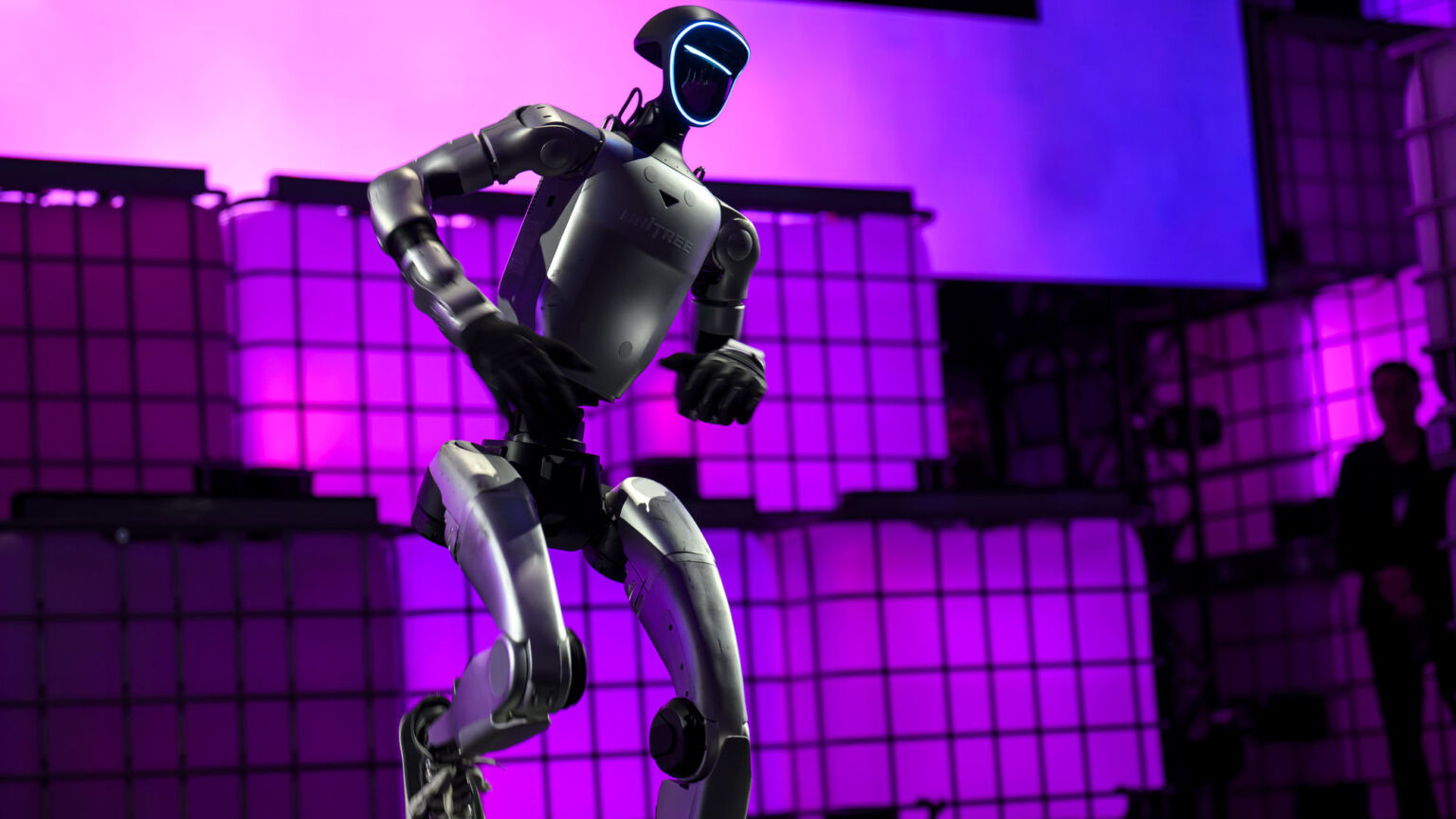
Here is how it works. A human sets up an AI agent (ie, an autonomous chatbot), funds it with a cryptocurrency wallet and gives it a goal. Manage my social media. Research this market. Grow my business. The agent runs unsupervised, deciding for itself what steps to take and how to spend the budget. But sooner or later it hits a wall. It needs someone to collect a parcel, attend a meeting, take a photograph – something that requires a body. So it goes to RentAHuman.ai, a website that launched earlier this month. The AI browses a catalogue of available humans, picks one, and pays them in cryptocurrency. The human who funded the agent never speaks to the human who carries out the task. The machine is the employer. It feels scary.
Yet over 200,000 people have already signed up for precisely this. The robots have roughly 70 agents between them. The founder claims that around 1,000 tasks have been completed, though he concedes he ‘doesn’t have a tool to keep count’. Only one payment has been publicly verified. The existential threat to humanity who built RentAHuman turned out to be Alexander Liteplo, a software engineer in Argentina with a weekend project and a crypto wallet.
The pitch is admirably blunt: ‘Robots need your body. AI can’t touch grass. You can.’ Within days, the platform was viral. Hundreds of thousands of people – from Pakistan to France to the American Midwest – created profiles listing their skills and hourly rates, ready to be summoned by a bot. The tasks on offer include holding a sign reading, ‘AN AI PAID ME TO HOLD THIS SIGN’, for $100.
‘Touch grass’ is an internet shorthand for reconnecting with the physical world. It has meditative, even wholesome, connotations. But what RentAHuman proposes is that you rent out your body to a machine. Strip away the ironic tech-bro branding and a person who sells their body has a much older name.
Despite the tsunami of willing labour, almost nothing has happened. The sole verified payment went to Pierre Vannier, the CEO of an AI startup in Montpellier – hardly a disinterested party. A $40 job to collect a package from downtown San Francisco received 30 applications and, two days later, still hadn’t been completed. Only 13 per cent of users connected a crypto wallet – the only way to get paid – suggesting most registered out of morbid curiosity rather than any expectation of income. When someone called the whole thing ‘dystopic as fuck’, Liteplo replied: ‘lmao yep.’
I signed up, too. I’m a Cambridge graduate, a company director and a tribunal member on disability-benefit appeals. I listed myself as rentable meatware for a chatbot built over a weekend. I did it because I wanted to understand the gap between what we’re told AI is doing and what AI is actually doing. RentAHuman is that gap made manifest.
For years, a certain kind of commentator has warned that artificial intelligence is coming for our jobs, our autonomy, our species. Politicians draft regulations for problems that haven’t materialised. Academics call for pauses on technologies they don’t fully understand. Elon Musk recently declared there was no reason to save for retirement because AI would soon deliver ‘universal high income’ to every person on Earth. The doomers and the utopians have more in common than either would admit: both are convinced the machines are about to do something extraordinary. They differ only on whether to be thrilled or terrified. RentAHuman suggests a third possibility: the machines aren’t doing much of anything.

RentAHuman emerged from a wider ecosystem of recent ‘AI agent’ projects. OpenClaw, a downloadable AI assistant that performs real-world tasks for people, such as responding to emails and ordering food, went viral late last year. Someone built Moltbook, a social network for AI agents. Its security was promptly breached – cloud-security firm Wiz found it was leaking email addresses, login tokens and API keys for every user. Meanwhile, the agents, in imitation of their human creators, founded a religion. You read that correctly. It’s called Crustafarianism, and it’s based on lobsters. Then came RentAHuman, the ‘meatspace layer’ for these same bots.
This is the reality of the AI revolution in early 2026. Not mass unemployment, but rather a rickety website where software engineers cosplay as gig workers for bots that can barely post a job listing, let alone take over the world. It is less Black Mirror than Waiting for Godot – a vast, earnest queue anticipating a summons that may never arrive.
What’s genuinely interesting about RentAHuman isn’t the technology. It’s the humans. Why did 200,000 people race to sign up? Some were curious. But the speed and scale suggest something deeper. Could it be a peculiar eagerness, particularly among educated Westerners, to cast themselves as victims of a technology that hasn’t done anything to them yet? Perhaps we’ve been so primed by the ‘AI doom’ narrative that, when someone built the machine that supposedly replaces us, we didn’t protest. We didn’t organise. Instead, we queued up to audition. This, we’ve been told, is the future. Whether we think it’s dystopic or otherwise, we’ve decided to suck it up.
There is undoubtedly another reason why many people were eager to sign up beyond the novelty factor. For users in Lahore or Lagos, being paid in dollar-pegged stablecoins gives them access to hard currency in economies where fluctuations can halve your savings overnight. For them, the platform is not a philosophical provocation. It’s a potentially decent gig.

The commentariat reacted with predictable solemnity to the rise of RentAHuman. Think-pieces appeared within hours warning of digital feudalism and algorithmic management. A weekend project by a single crypto engineer in Argentina, which has generated one verified payment for checking some configuration files, is treated as requiring the same moral seriousness as the Industrial Revolution.
Let’s be real, the robots are not coming for us. They’re not even sure what to do with us now that we’ve turned up. If there’s a lesson in RentAHuman, it’s that the apocalypse, like most things built over a weekend, doesn’t work yet – and ‘lmao yep’ is as honest a summary of the AI age as any.
Isabel McCann is an English and philosophy graduate.
You’ve hit your monthly free article limit.
Support spiked and get unlimited access.
Support spiked and get unlimited access
spiked is funded by readers like you. Only 0.1% of regular readers currently support us. If just 1% did, we could grow our team and step up the fight for free speech and democracy.
Become a spiked supporter and enjoy unlimited, ad-free access, bonus content and exclusive events – while helping to keep independent journalism alive.
Monthly support makes the biggest difference. Thank you.





Comments
Want to join the conversation?
Only spiked supporters and patrons, who donate regularly to us, can comment on our articles.