‘The West’s self-hatred is deeply dangerous’
Marie Kawthar Daouda on why the woke assault on Western history does nothing for ethnic minorities.
Want unlimited, ad-free access? Become a spiked supporter.
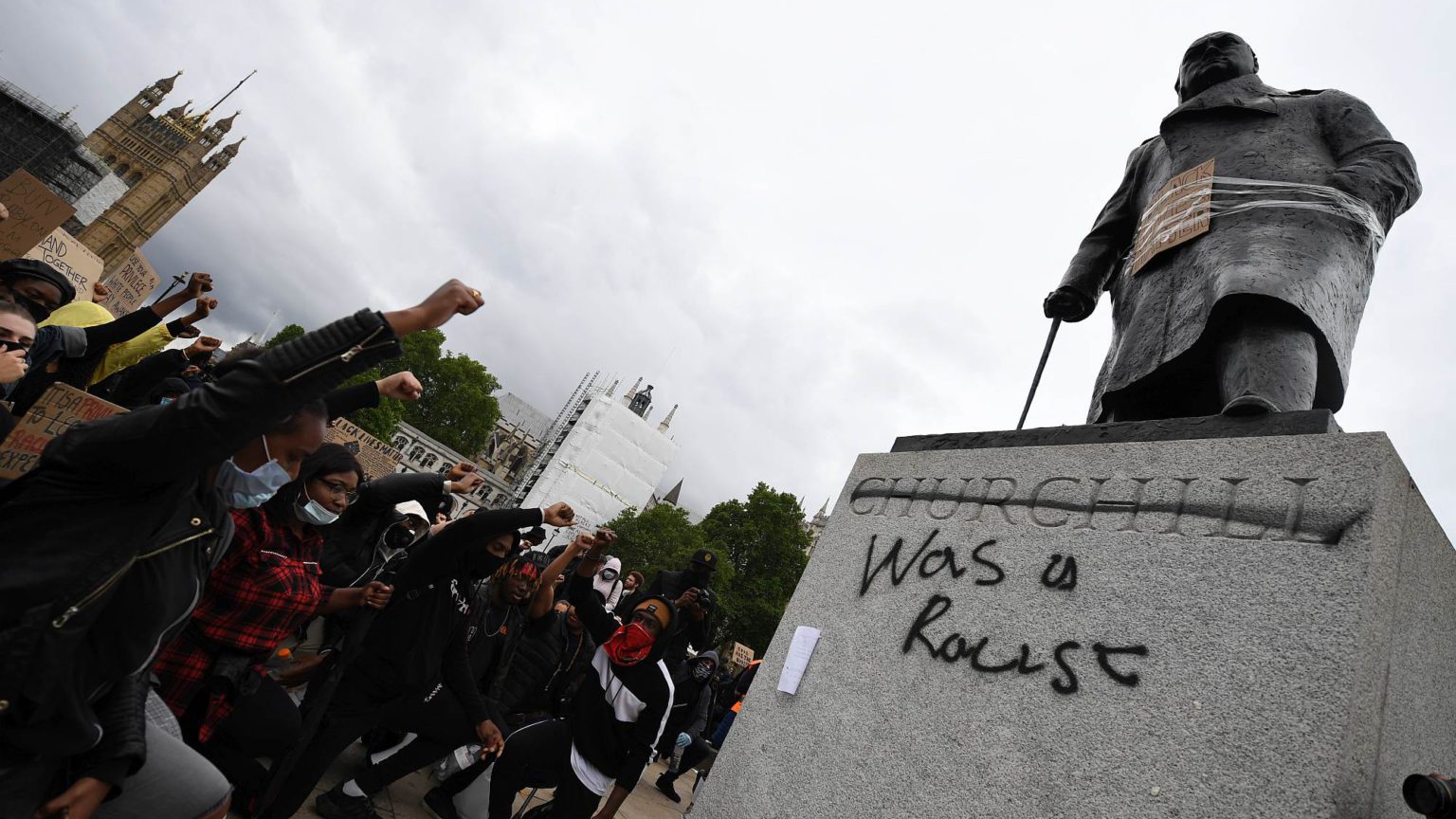
In the summer of 2020, the Black Lives Matter movement declared war on the past. Statues were toppled in a year-zero frenzy. Institutions fell over themselves to apologise for the misdeeds of the past, including those committed by men who’ve been dead for centuries. Western history, we were told, was one long story of oppression and racism. The present would have to be ‘decolinised’ and cleansed of its ‘whiteness’.
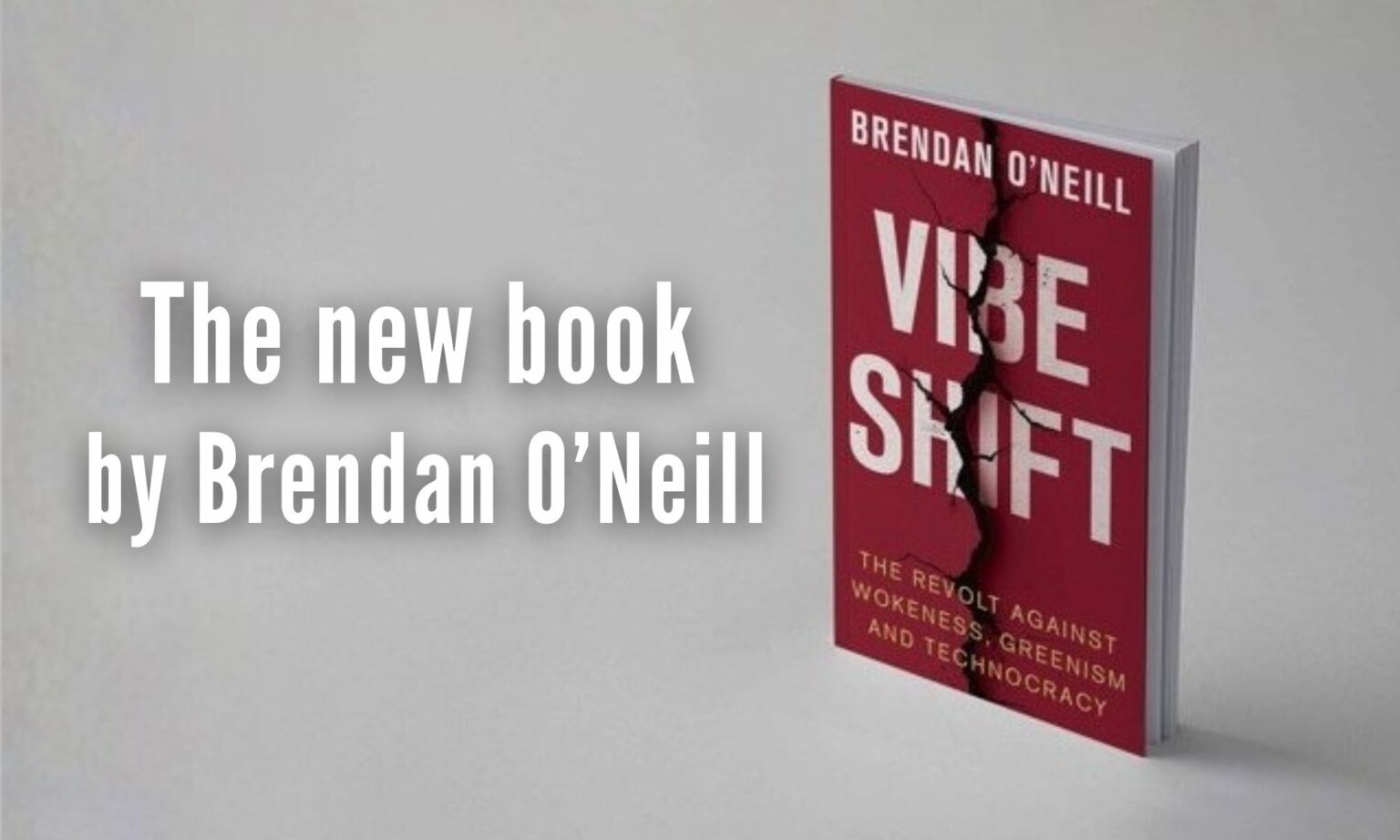
Marie Kawthar Daouda – lecturer at Oriel College, Oxford – joined Brendan O’Neill on The Brendan O’Neill Show to discuss the legacy of BLM, the statue wars and her new book, Not Your Victim: How Our Obsession With Race Entraps and Divides Us. What follows is an edited version of that conversation. You can watch the full thing here.
Brendan O’Neill: Was there a specific moment you realised that Britain had become captured by identity politics?
Marie Kawthar Daouda: I think it was the whole frenzy that occurred in the summer of 2020. The wave of Black Lives Matter spread all over the globe. In Oxford, the statue of Cecil Rhodes at Oriel College became a huge source of tension, with a fervent campaign for its removal. In Bristol, Edward Colston’s statue was torn from its plinth. The same was happening with many other statues, both in the UK and the US. As an ethnic-minority person, it occurred to me that I was not upset by the presence of these statues. It got me thinking about how I was going to convey that to other people. How would I explain that Western heritage, Western architecture and Western art are not things that should be deemed ‘offensive’ to other people, just because they happen to have a different skin colour or ethnicity.
I thought it would be good to delve back a bit into my own experience of immigration. How one lands into a country and grows to appreciate it for the good and the bad that it has to offer. I wanted to share that with others, especially bearing in mind that many young people today – either through the education system or just the general culture – are exposed to just one side of the narrative. They tend to assume that everyone sees Western heritage as a tool to make immigrants or ethnic minorities feel excluded.
O’Neill: Why was there such a focus on statues during that period?
Daouda: Statues are extremely strong visual reminders of the worlds we occupy. One probably doesn’t think about them much in countries which have statues everywhere, such as Britain and France. But coming from Morocco, a place without many statues, I suppose I’m even more aware of how powerful they are.
The toppling of Colston’s statue was a bizarre scapegoating of an inanimate object for something that happened in the 18th century. Colston was not the only man to have been involved in the slave trade, either in Britain or the rest of the world, but it was as if his statue had to pay the price for all the slave-related atrocities anyone in Britain’s history has ever committed. The paradox is that Colston’s statue was erected after his death, during the Victorian period. This was an age when philanthropy was what earned you respect. If you wanted to be memorialised, you had to make donations, found schools and hospitals and so on. That’s what Colston had done. The City of Bristol was not celebrating him for the harm he had caused, but for the good he did.
In a country where there are no statues, it’s very hard to find any visual traces of the benefactors, of the people who marked the country through what they did. In Morocco, we had many dynasties. We had a huge empire. And yet, we don’t have anything to show for it, because it is impossible to point to something physical and say, ‘This was the sultan from that period’. When we want to do that, we have to turn to works that were painted or drawn or sculpted by Western artists who came to visit – or to Western portraits of ambassadors to the Sharifian Empire, which were created as a matter of course during state visits. In Britain and the wider West, we have to be grateful just for the very fact of having statues, because it is one of the best ways to learn about our history. They narrate the story of the country as we walk through it.
O’Neill: To what extent do you think the destruction of Western heritage is driven by an attempt to prove one’s innocence in a time when white people, in particular, are seen as inherently problematic?
Daouda: The problem that much of the Western world faces today is that the historical good done by Western countries has been completely overshadowed by a narrative where everything that was touched by any white man is bad. When we talk about slavery, we rarely mention that it is largely thanks to the British Empire that the transatlantic slave trade came to a close. Nor do we mention that, in the case of many French colonies, where terrible things certainly happened, it is thanks to the French imposition of the rule of law that slavery formally ended. With the absence of that historical knowledge – and after a whole generation has spread the narrative that the West is wholly evil – people find moral catharsis in constantly proving how much they condemn the things that happened centuries ago.
There is something extremely performative about the way these activists go about denouncing Western history. If you ask any random liberal white person on the street, ‘Do you feel personally responsible for slavery?’, no one would say, ‘Yes, I do’. It’s all about casting blame on previous generations – severing the link between who we are now and who our ancestors were before us. This is a very dangerous thing to do, because it leads to a much deeper form of self-hatred.
Far more beneficial would be for us to take ownership over the bad things happening right now, in the time we actually live in. We complain a lot about what occurred throughout Western colonial empires, but little about what’s going on in the present. What about the French interference in modern African politics? Or the rampant modern-day slavery in countries where Britain has a diplomatic presence? There is much we could be tackling on the grounds of defending equality, fairness and human dignity. But it’s much easier to whine about things that happened before your lifetime. No one can hit you back or tell you you’re wrong. A statue can’t do anything to defend itself if it’s cast down. You don’t have to make any real change – you just have to prove to everyone that you’re innocent of the sins of your fathers.
O’Neill: What do you think the Black Lives Matter period told us about our collective attitude towards history?
Daouda: Perhaps the most insane thing about the early 2020s was how distorted our view of the past has become. We remember only the harm done by one group to another – which is a strange way of looking at it, because at some point in all of our ancestries, someone related to us has been harmed by someone related to someone else. Do we all have a cause for grievance, in that case? Could the Catholics also ask for reparations, and claim all of their churches back across Britain? Should everyone be standing up and saying, ‘What about my rights’?
The answer is generally no, because this mentality has only been applied to black people or people of African heritage. It ends up reinforcing the idea that black people are permanent victims, and that there is nothing they can do to claim their agency. Ironically, the best thing a community can do to claim agency is to know their history – and to understand that the history of any people has both good and bad within it.
Marie Kawthar Daouda was talking to Brendan O’Neill. Watch the full conversation below:
You’ve hit your monthly free article limit.
Support spiked and get unlimited access.
Support spiked and get unlimited access
spiked is funded by readers like you. Only 0.1% of regular readers currently support us. If just 1% did, we could grow our team and step up the fight for free speech and democracy.
Become a spiked supporter and enjoy unlimited, ad-free access, bonus content and exclusive events – while helping to keep independent journalism alive.
Monthly support makes the biggest difference. Thank you.
Comments
Want to join the conversation?
Only spiked supporters and patrons, who donate regularly to us, can comment on our articles.