The assisted-suicide bill is class warfare at its ugliest
Why is the Labour Party so eager for the state to assist the poor and vulnerable in ending their lives?
Want unlimited, ad-free access? Become a spiked supporter.
In 1975, the then UK prime minister, Harold Wilson, stated: ‘A policy of euthanasia would be wholly abhorrent and there is absolutely no possibility of this government – or I believe of any government – ever giving it support.’ It is mildly ironic that this prediction has been disproved by a prime minister who views Wilson as the very model of a Labour leader.
Keir Starmer and his allies love to study the Wilson administrations, and have occasionally cited his line that the Labour Party is ‘a moral crusade or it is nothing’. But the assisted-suicide bill, which Starmer has covertly helped along since its very beginning, would have been Wilson’s nightmare. And the language used by some current Labour MPs about it – a vague, relentless drift of soundbites about compassion and autonomy – would have alarmed him with its superficiality.
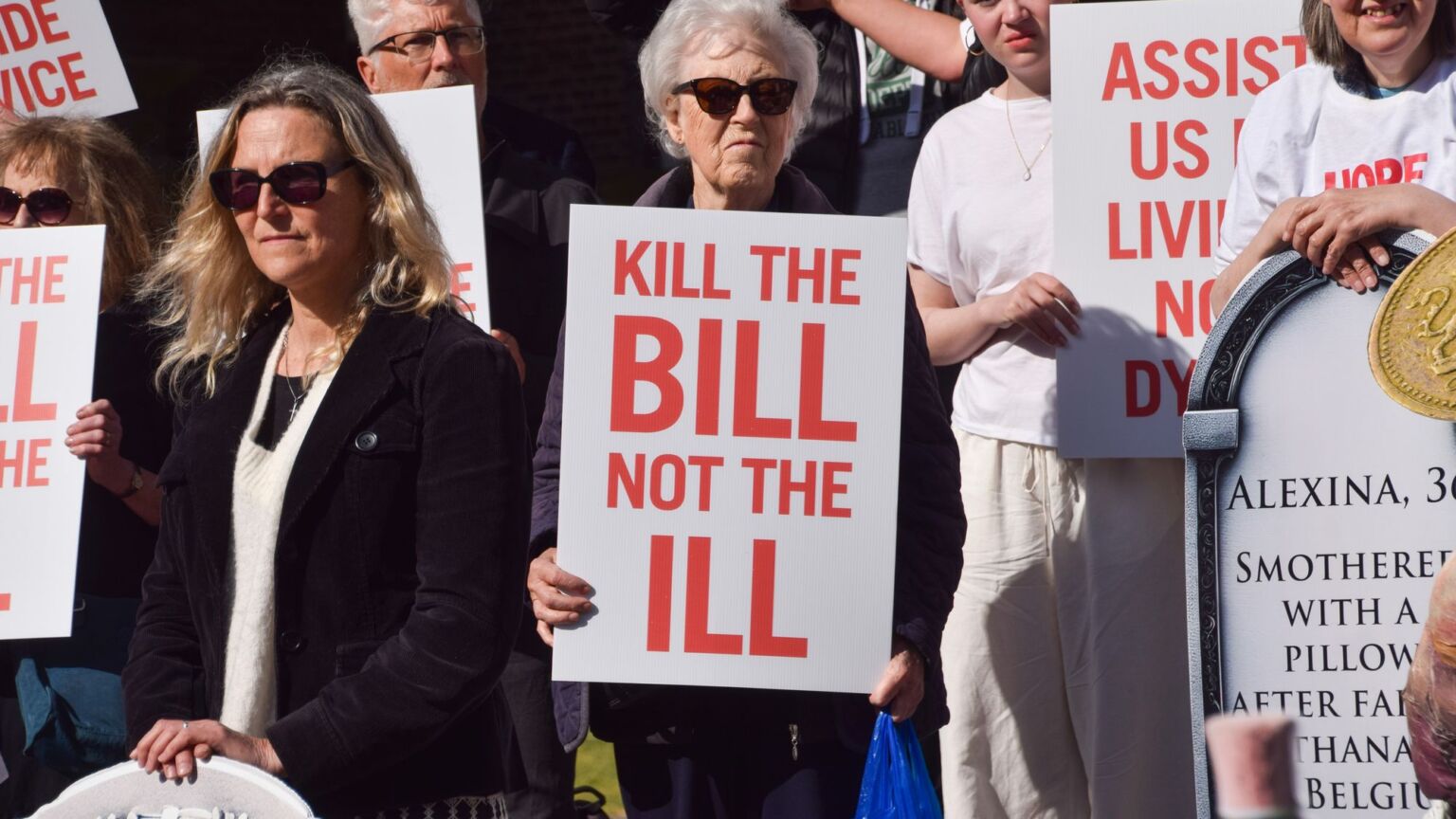
He would have been spot on, too. Currently being debated in the House of Lords, The Terminally Ill Adults (End of Life) Bill, which began with such pure intentions, looks more and more like one of the ugliest episodes of class warfare in modern British history. People ‘might well’ apply for an assisted death ‘because there is only a limited amount of money to go around’, the bill’s sponsor in the House of Lords, Lord Falconer, recently told parliament. ‘Your financial position might be an element in what makes you reach a decision’, he explained. When peers suggested amendments to rule out poverty as a motivation, he batted them away: you should not be ‘barred’, he argued, merely because you are ‘influenced by your circumstances – for instance, because you are poor’. As long as you meet the broad medical conditions, poverty is as good a reason as any to seek assistance in ending your life.
Euthanasia and assisted-suicide laws have a way of dividing the population into worthy and unworthy lives. This tendency lurks, of course, in the dark history of the euthanasia movement. This explains the alarm of disabled people’s groups, who are resolutely against the legislation. And it has been manifest in the arguments of the most brutally honest supporters of assisted suicide.
In 2024, Matthew Parris cheerfully wrote in the Times that, ‘Our culture is changing its mind about the worth of old age’. He rejoiced that while, ‘Your time is up’, might ‘never be an order’, he conceded that ‘the objectors are right’, it ‘may one day be the kind of unspoken hint that everybody understands’. We can’t afford to do anything else, Parris believes. Similarly, the New Statesman’s Oli Dugmore enthused last year that assisted suicide would bring down ‘the pensions bill, the NHS bill and the care bill’, and would relieve us of the old folk who sit in care homes ‘unvisited by relatives who are preoccupied by the rhythm of their lives, or perhaps unable to summon the courage to witness the degeneration of the once totemic figures of their lives, their mum and dad. Let them die.’
Not many people, I believe, start out by thinking like this – or if they do, they realise they should keep it to themselves. But over time, even the prospect of an assisted-suicide law makes the unthinkable seem reasonable.
Lord Falconer himself is a notable example. In 2012, he led a commission on assisted dying, whose report made clear – repeatedly, and as a central principle – that nobody should be receiving lethal drugs for lack of decent healthcare. ‘Any decision to seek an assisted suicide’, the report said, must be ‘a genuinely voluntary and autonomous choice, not influenced by another person’s wishes, or by constrained social circumstances, such as lack of access to adequate end of life care and support’.

When another peer read that out in the Lords back in November, Falconer nodded along with the first half, then suddenly stopped. To all appearances, he has abandoned his previous ideal. Earlier this month, when peers suggested that assisted-suicide applicants should be guaranteed a meeting with a palliative-care team, he declared: ‘Of course, nobody wants the absence of palliative care to be the reason you apply for an assisted death, but we have to give everybody this choice on the basis of the way the world is for them.’ Likewise, if your reason is that you are poor, you get the green light.
What lies behind Falconer’s nonchalance? Perhaps it is unfair to cite his parliamentary register of interests, which lists a remunerated partnership at the law firm Gibson Dunn, two flats in London and a cottage in Nottinghamshire. But one feels this is a different world from that occupied by the domestic-abuse experts, eating-disorder specialists, disability campaigners, psychiatrists, palliative-care doctors, inheritance lawyers and care-sector whistleblowers who have so forcibly opposed the bill.
‘Your financial position might be an element in what makes you reach a decision.’ It’s hard not to read those words without thinking of the rising numbers of over-60s sleeping in cars and emergency shelters, the tens of thousands being chased for care-home debt, the elderly people seeking admission to hospital ‘entirely due to housing, isolation, lack of social support, self-neglect, safeguarding’.
The Britain of 2026 could certainly do with a moral crusade. But who could have guessed that Labour’s one would look like this?
Dan Hitchens is senior editor of First Things.
You’ve hit your monthly free article limit.
Support spiked and get unlimited access.
Support spiked and get unlimited access
spiked is funded by readers like you. Only 0.1% of regular readers currently support us. If just 1% did, we could grow our team and step up the fight for free speech and democracy.
Become a spiked supporter and enjoy unlimited, ad-free access, bonus content and exclusive events – while helping to keep independent journalism alive.
Monthly support makes the biggest difference. Thank you.







Comments
Want to join the conversation?
Only spiked supporters and patrons, who donate regularly to us, can comment on our articles.