Why the UK needs a new city
A housing crisis, a broken planning system and low ambitions have held Britain back for far too long.
Want unlimited, ad-free access? Become a spiked supporter.
Britain hasn’t built a new city in over half a century. Indeed, it was nearly 60 years ago, in 1967, that the BBC visited a quaint, rural hamlet called Milton Keynes, comprising a thatched pub, a church, a manor house and village green that was soon to be absorbed into a major New Town.
Milton Keynes had been chosen because of its prime location: equidistant between London, Birmingham, Leicester, Oxford and Cambridge. It was an ancient village that had existed since Saxon times – its name even featured in the Domesday Book in the 11th century.
Careful planning over the next decade enabled the village’s historic landmarks to remain, and the area has matured into a city with nearly 300,000 residents. It has museums and galleries, shopping malls and restaurants, theatres and stadia, as well as a thriving business sector: its £16 billion economy is 27 per cent above the national average.
Modern politicians have tried and failed miserably to repeat the success of Milton Keynes. Gordon Brown’s 2007 ‘Eco-Towns’ was a piffling project that was abandoned almost before it started. David Cameron’s ‘Garden Cities’ were on a smaller-scale and just as unsuccessful. A plan for 10,000 homes in Northstowe, near Cambridge, has been delayed, and Ebbsfleet’s new town in Kent has built just 3,000 homes in 10 years. The list of not-so-heroic failures goes on.
Enter UK prime minister, Keir Starmer. Last year, Labour promised to build 10,000 new homes each in Tempsford in Bedfordshire, Leeds South Bank and Crews Hill in London. What they all have in common is that they are publicly funded schemes for under-employed architects – and, of course, rallying calls for environmental protesters. The result will be familiar: lots of proposals, but very little building.
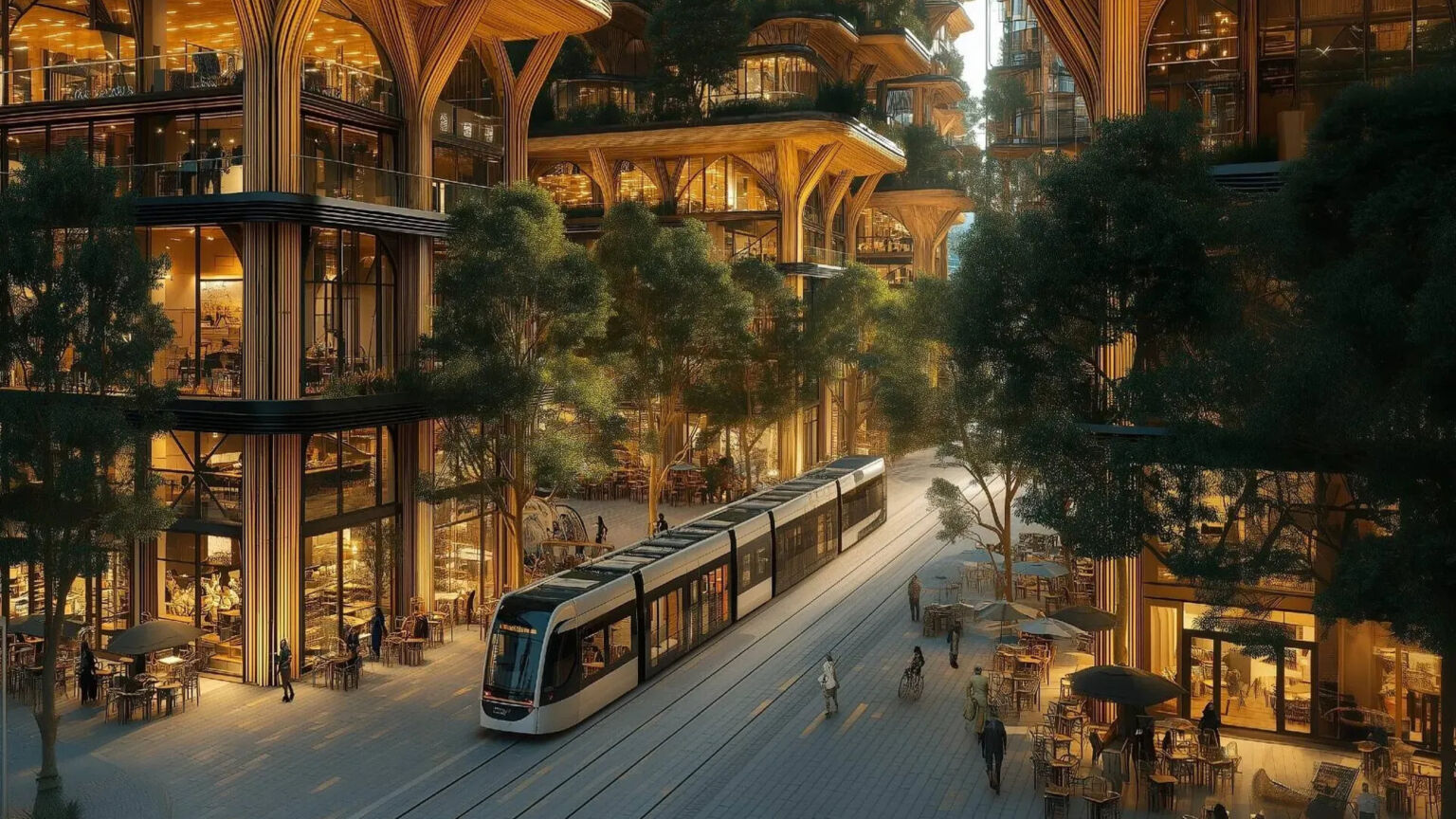
Recently, however, a new proposal has arisen to demonstrate that Britain can build new cities, and that it can happen reasonably quickly. ‘Forest City 1’ (FC1) is the brainchild of journalist and businessmen Shiv Malik and Joseph Reeve, co-founder of the Looking For Growth. The plan is to build 400,000 homes, housing a million people, across 45,000 acres east of Cambridge, between Newmarket and Haverhill in Suffolk.
It envisions new schools, hospitals, leisure centres, and road and rail links to nearby villages. Whereas most private-sector development only occurs if the project can tap into existing infrastructure (which requires less money), FC1 hopes to construct new water supplies and waste treatment. In other words, it really will be a new city.

How has this been received by the UK government? Labour pledged to build 1.5million new homes in the next five years. This is a standard ambition with, so far, a standard rate of under-achievement. The first of those years, for example, concluded with just 221,000 housing units granted permission – not built. Indeed, last year, the number of planning applications in the UK fell to an all-time low. With this in mind, the government is apparently looking favourably on this Forest City 1 mega-project. Here’s hoping that, for once, Westminster will offer more than warm words for such an imaginative proposal.
To get FC1 off the ground, the site, which is predominantly owned by a few landowners, will be given over to the Albion City Development Corporation (ACDC) – a similar concept to that which ensured Milton Keynes’s construction. The ACDC will have the power to compulsorily purchase land cheaply. As a special economic zone, it will also be given certain tax breaks. Critically, it will be able to sidestep bureaucratic local planning regulations, which should reveal how unnecessary most of them are. Of course, several vocal protesters have suddenly discovered a love of farming in order to stop development on predominantly agricultural land. This despite these eco-protesters not rallying to farmers’ side in their dispute with the government over its livelihood-threatening changes to inheritance tax.
FC1 also plans to ensure affordability through what is known as an asset lock. In this way, the developers suggest, a four-bedroom family home can be expected to sell for £350,000 – far cheaper than the current average in Cambridgeshire, which is upwards of £500,000. One third of properties will be rentable. Costs will be kept down, says FC1, by dealing with a pre-assembly contractor for the first real roll-out of mass-produced, prefabricated housing.
All well and good so far – but I do have some concerns. For example, FC1 is voluntarily professing its environmental credentials. Its website waxes lyrical about ‘biodiversity’ and ‘walkable neighbourhoods’. Malik describes the proposed site as ‘industrial agricultural land’, presumably as a way of ingratiating the proposals with environmentalists, such as George Monbiot, who view farming as ‘the most destructive human activity ever’.

If FC1 thinks that its green vision will satisfy eco-zealots, it will be in for a bumpy ride. Environmental ideology is premised on prioritising nature over humanity, and its supporters won’t accept a new city on any terms. Running away from this conflict – or worse, colluding with the environmental lobby – is not the most confident start. To make the moral case for growth, it must tackle the misanthropic bullshit of degrowth head-on.
There is some hope. In our populist times, many people know that we cannot continue on our current trajectory of failure. That means that proposals can be audacious, because people are more receptive to change. FC1 simply needs to convince people of the benefits of taking a risk, and the moral necessity of human-centred values.
Milton Keynes improved people’s lives, tackled poverty and provided people from inner-city areas with new, improved housing. The aim of the Milton Keynes developers was simply to build a good city ‘that lays the foundations for organic development’. This should be enough. It is time to put the interests of the British people ahead of the environmental lobby.
Austin Williams is director of the Future Cities Project. Follow him on X: @Future_Cities.
You’ve hit your monthly free article limit.
Support spiked and get unlimited access.
Support spiked and get unlimited access
spiked is funded by readers like you. Only 0.1% of regular readers currently support us. If just 1% did, we could grow our team and step up the fight for free speech and democracy.
Become a spiked supporter and enjoy unlimited, ad-free access, bonus content and exclusive events – while helping to keep independent journalism alive.
Monthly support makes the biggest difference. Thank you.






Comments
Want to join the conversation?
Only spiked supporters and patrons, who donate regularly to us, can comment on our articles.