‘Free-thinking women are being culled from the arts’
Rosie Kay on how cancel culture and self-censorship are sapping the life out of the creative industries.
Want unlimited, ad-free access? Become a spiked supporter.
The arts sector in Britain is enduring an epidemic of self-censorship. A 2025 survey by Freedom in the Arts found that a majority of artists and arts professionals feel they can only ‘sometimes’ or ‘rarely’ express their personal opinions, especially if they hold a dissenting view on gender, race or Israel-Palestine. The so-called creative industries, where free speech and risk-taking were once seen as their lifeblood, have become conformist and censorious.
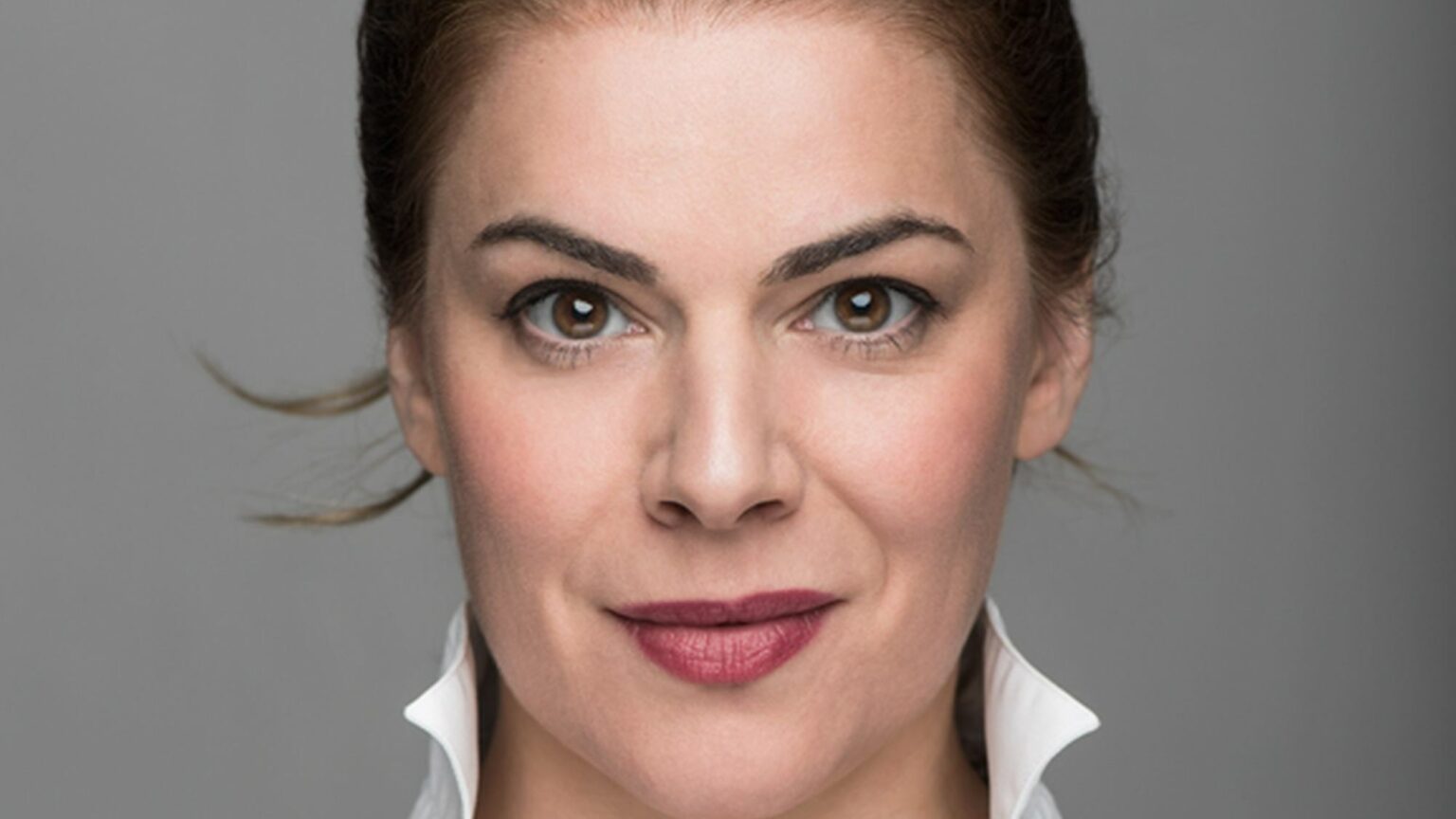
Dancer and choreographer Rosie Kay recently joined Brendan O’Neill on his podcast, The Brendan O’Neill Show, to discuss her work with Freedom in the Arts, as well as her own experience of cancellation from the cultural sector. What follows is an edited version of that conversation. You can watch the full thing here.
Brendan O’Neill: You experienced ideological censorship in the arts first hand. Can you tell us what happened to you?
Rosie Kay: I was in the midst of making a large-scale production of Romeo and Juliet. It was quite complicated. It was during Covid. My father had just died of cancer, so it was a very stressful time.
To bond with the young dancers (who were all adults and professionals, though I’d known some of them since they were teenagers), I invited them to my home. It was August, warm, and we sat outside for a dinner party. Late into the night, they started asking me about my next show. I was two years into preparing a dance version of Virginia Woolf’s Orlando. The conversation turned to casting – whether the role should be portrayed by a man or a woman, or a trans or nonbinary performer. Then they explicitly asked my views on sex and gender. I defended the rights of women, and as a result, the discussion got quite heated. I argued my position robustly, but I also sensed that people were upset. I tried to smooth things over as best I could that evening.
When I returned to work, however, I faced a very hostile environment. I asked my board to get involved. They conducted an investigation, and I was exonerated. But then there was an appeal. Even though the dancer who had complained had left the company, I went through a gruelling second investigation. At that point, I was deeply worried for my health and had lost all respect for anyone I was working with. They simply didn’t understand the arguments I had made. In the end, I decided to resign from my own company and start again from scratch.
O’Neill: Do you think artistic censorship has a particular impact on women?
Kay: Definitely. It really shows the rank misogyny underlying so much of what we thought had been overcome. I’m nearly 50, and I thank my mother and my grandmother for the battles they fought for me to have an independent, financially secure life in the arts. And yet, I’ve been absolutely shocked and devastated by what is happening to women now.
Being in the dance industry, I understand gender imbalance very well. Since there are fewer men in the dance world, they often get the scholarships and get more attention. Women have to navigate a much more competitive environment. There are different hurdles to overcome; as a female dancer, for instance, having a baby can be absolutely disastrous for your career. This is a big part of my argument, and what I tried to convey at that dinner party with my company. I nearly died giving birth – a uniquely female experience – and I had to fight tooth and nail to get back into the dance world afterwards.
I see so many women being bullied and harassed for not accepting trans ideology. They’re leaving their professions, they’re being pushed off boards. I’ve met really accomplished women who told me they tried to communicate their point of view, but were ostracised or forced out of their companies, or investigated over tenuous, strange accusations. It feels like there’s a kind of cull happening to all the bright, intelligent, ambitious women in the arts.
O’Neill: Do you think these cancellations act as a warning to others not to speak up?
Kay: That’s right. Just look at Kate Clanchy, who was dropped by her publisher after activists tore her book apart. Or Martin Speake, the jazz musician forced to resign from the Trinity Laban conservatoire for questioning Black Lives Matter. These were hugely impactful cases. People aren’t just losing a job – they’re losing their entire livelihood, their reputation, and decades of work they’ve built from scratch.
I try to remind myself that the people doing the attacking genuinely think they’re in the right. They believe they’re virtuous and that they’re doing something powerful and wonderful. But it’s such an odd juxtaposition. It’s so strange to witness.
The issue of self-censorship continues to strike me every time I hear about it. There was a successful experimental poet I interviewed who had written a poem maybe 10 or 15 years ago from the perspective of a complex female character. In our discussion, he explained that now, if he starts imagining characters or situations that could be perceived as ‘dangerous’, he stops the thought entirely. I find that extraordinary.
Part of the problem, I think, is the structure of the arts sector. The artist is at the very bottom, trying to create something new and extraordinary. But they have to go through this massive, heavily bureaucratic administrative class in the middle before finally making it to the audience, the general public. Audiences are starting to sense that the arts are feeling a little stale, stifled or even a bit lecturing, though they don’t always know why. That gap – the heavy middle layer policing everything – is squashing all the brilliant new ideas.
O’Neill: What role is DEI playing in the arts world right now?
Kay: During Covid, just about every Arts Council-funded organisation had to go through some kind of struggle session about how ‘racist’ they were. This led to measures like actual quotas being implemented, on both board representation and the demographic makeup of the company. Again, there may have been an element of good intentions there, but it very quickly descended into something that I found, frankly, quite racist.
Companies became so focussed on skin colour that they forgot to address the real barriers to getting into the arts, which are enormous. Making a living in this industry is exceptionally difficult, and I often meet parents who say they don’t want their children to go into the arts – especially into dance – because it’s so unstable. So the barriers are real. But simply putting a quota on the end product felt short-sighted, not to mention insulting. How can anyone brought in under these policies be certain they were selected for their talents, and not just the colour of their skin?
Rosie Kay was talking to Brendan O’Neill. Watch the full conversation here:
You’ve hit your monthly free article limit.
Support spiked and get unlimited access.
Support spiked and get unlimited access
spiked is funded by readers like you. Only 0.1% of regular readers currently support us. If just 1% did, we could grow our team and step up the fight for free speech and democracy.
Become a spiked supporter and enjoy unlimited, ad-free access, bonus content and exclusive events – while helping to keep independent journalism alive.
Monthly support makes the biggest difference. Thank you.
Comments
Want to join the conversation?
Only spiked supporters and patrons, who donate regularly to us, can comment on our articles.