Lord Reith, Alan Yentob and the arrogance of the BBC
The Messianic self-importance of the BBC’s higher-ups is a feature, not a bug.
Want unlimited, ad-free access? Become a spiked supporter.
When Michael Prescott’s internal memo recording editorial bias at the BBC was leaked last year, there was an instant hullabaloo. Everyone who had been critical of the BBC – whether it was for its coverage of trans issues, Israel or any ‘culture war’ issue – had been vindicated. Then something strange happened. A large chunk of the British establishment blew a collective raspberry.
From former Blair spin doctor Alastair Campbell and Channel 4 presenter Kirstie Allsopp to senior staff within the BBC itself, the great and the good insisted the ‘bias’ claims were the result of a conspiracy of the right-wing variety. The Guardian’s former editor, Alan Rusbridger, even posted a handy guide to the spider’s web of influence he claimed lay behind the allegations.
These knee-jerk responses echoed the disbelief of panjandrums at the BBC. ‘The BBC is facing a coordinated, politically motivated attack’, droned John Simpson, who draws a £190,000 annual salary from the BBC’s coffers. Radio 4 presenter Nick Robinson thought it was rich that Boris Johnson had dared to comment at all. Robinson picks up an even more impressive £410,000 from the licence-fee payer.
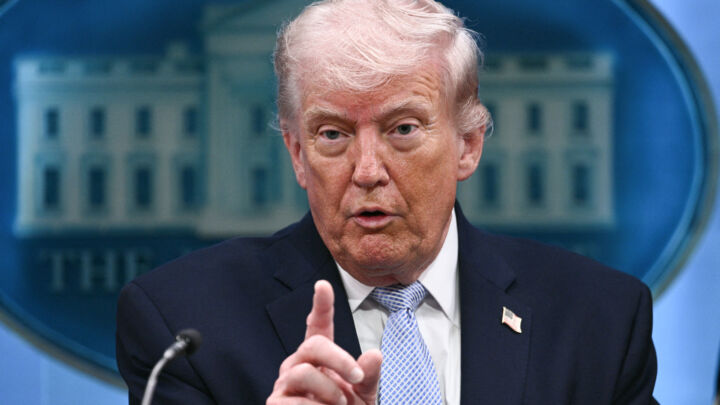
The only apology BBC chairman Samir Shah was prepared to offer was for ‘an error of judgement’. That is not how most people would regard the misleading edit of a Donald Trump speech, making it sound as if he had directly incited the mob on ‘January 6’, which was aired in a Panorama documentary in 2024. The denials of bias by the director-general Tim Davie and head of news Deborah Turness were more forthright still. You could be forgiven for thinking their resignations were just some unfortunate coincidence.
These uncritical cheerleaders for the BBC appear to believe they’re doing it a service. They’re really not. Instead, they are reinforcing the BBC’s worst flaw: its arrogant corporate culture – one bequeathed to it just over a century ago by its spectacularly self-centred and misanthropic founder.
John Reith, the first director-general of the BBC, argued that the corporation’s mission was to ‘carry the best of everything into the greatest number of homes’. But what constitutes ‘the best’, exactly? Reith suggested it was up to the BBC to decide because, in his own words, ‘few knew what they wanted, fewer what they needed’.
A darker picture of Reith emerged in 1975, with the publication of his diaries. All through his life, the founder of the BBC continually updated a secret list of people whom he despised. Winston Churchill, it turned out, was top of it. ‘It will be a hundred years before Britain ever gets over the malign influence of that unscrupulous man’, was one of Reith’s least-expletive-laden comments.
This animus had a practical impact. Churchill was treated as a pariah by the BBC throughout the 1930s. Instead, Reith looked kindly on the men Britain would soon be at war with. A huge admirer of both Mussolini and the Nazis, Reith was still praising Hitler in 1938, applauding his ‘magnificent efficiency’ in annexing Czechoslovakia. Reith’s pig-headed arrogance was summed up in this moment of misanthropic self-awareness:
‘I suppose I am and always have been completely self-centred, I have no ordinary human kindness or tolerance. I have brilliance, intellect and all sorts of things like that… Loathing the common people, I will rarely admit greatness in others.’
To be fair, the BBC has tried to escape Reith’s legacy of self-righteous hypocrisy. The problem is that, whenever a crisis strikes, it’s Reith’s instincts that reassert themselves.
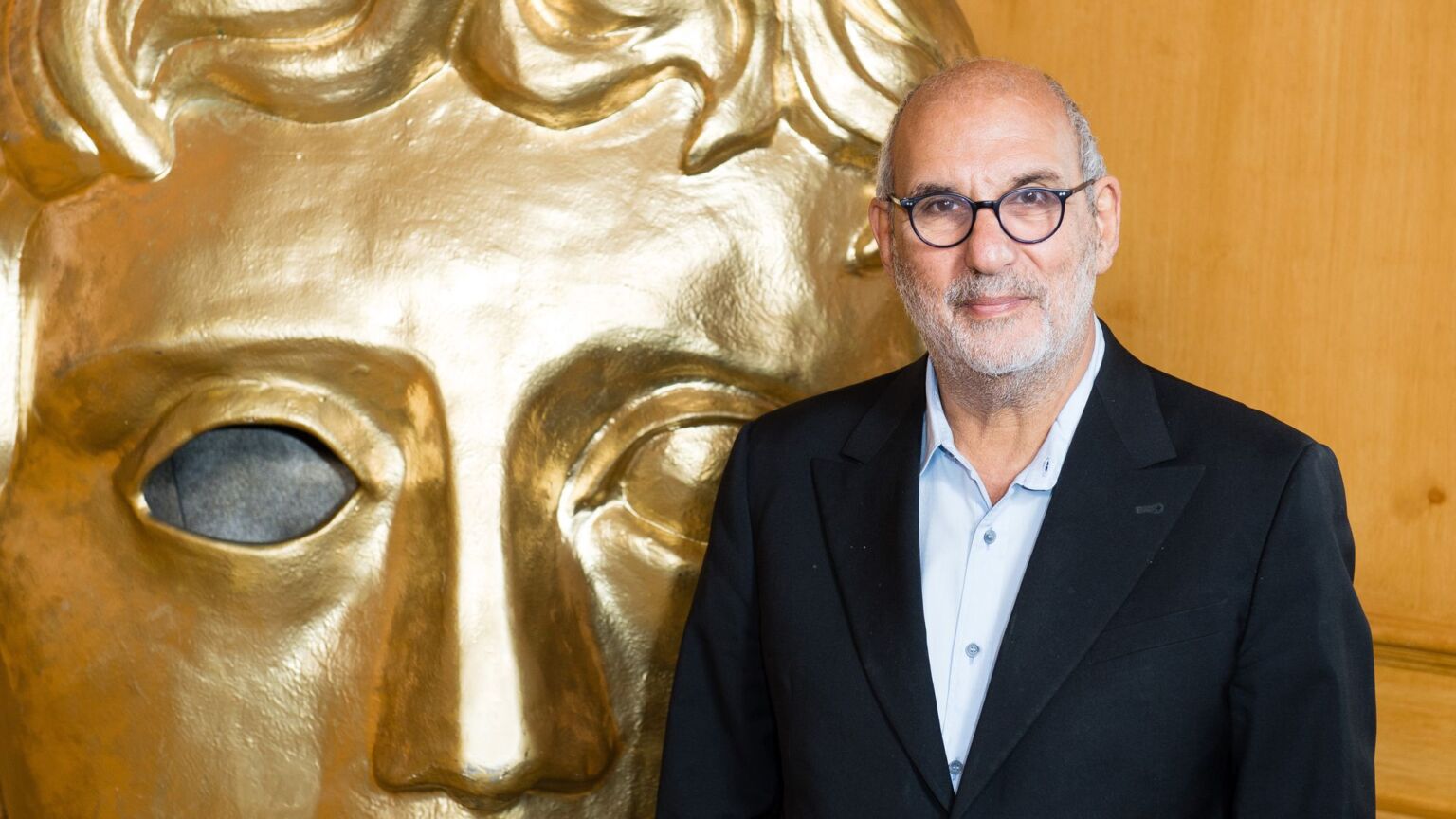
I saw this for myself when I worked with the late Alan Yentob, a man who personified the BBC’s ingrained sense of its own superiority. When Alan died last year, many observers suggested that he was the embodiment of the broadcaster. ‘He is the BBC!’, proclaimed Mark Lawson in an obituary. Even the usually reliable Rod Liddle claimed Yentob was ‘what the BBC should be’. In his defence, Liddle admitted he had never worked with Yentob. I had. And trust me, Yentob was the opposite of what the BBC should be.
When I met Alan in 2002, he was embroiled in yet another of what seemed an endless series of controversies about his lavish spending. The press devoted page after page to his inability to distinguish between his own money and the BBC’s. There were the lavish parties he hosted at his second home near Glastonbury, where hospitality was provided courtesy of the licence-payer. Then there was his Marie Antoinette-like insistence that ‘I can’t do my job if I don’t fly business class’.
Yentob behaved like an ageing Caesar. In 2002, licence-payers funded a lavish party he hosted at his Tudor mansion in Somerset. In 2004, it was reported that chauffeur-driven BBC cars were used to transport his wife and children. Towards the end of his career, he reportedly billed the BBC £1,500 for taxis in one year alone.
When regulators dared to criticise his spending, Yentob was dismissive. In one retort, he explained, as if speaking to an 11-year-old, that: ‘There’s a point to which we should be held to account, but there’s also a point after a while when people are trying to interfere in which programmes you do and how you do them, where it can get a bit trying.’
When the drip-feed of hostile coverage refused to be waved away, the BBC invented a new role for Yentob, one that didn’t come with the same huge discretionary budget attached. As ‘creative director’, he would also present a new art series, Imagine, the first episode of which I was asked to direct on the subject of Leonardo da Vinci.
On the shoot, Yentob would spend hours fielding calls from BBC lawyers and then rage against ‘those bastards at the Daily Mail’ or ‘the fucking Murdoch press’. They were ‘attacking me to get at the BBC’, he said. Plus ça change.
The refusal to take criticism seriously was justified by Yentob – as it is today by the BBC’s cheerleaders – on the basis that the national broadcaster isn’t like any other media organisation. It is special. Like the United Nations or the royal family. It has a coat of arms for goodness sake. Yentob showed how easily all this can lead to delusions of grandeur.
Our working relationship hit the rocks when I rejected one of his ‘creative’ suggestions. For the scenes where we discussed Leonardo’s time in Milan, I had commissioned a life-size copy of The Last Supper. Alan argued we should recreate the last supper itself on film. He would invite his friends to play the disciples. There would be Richard (Rogers), Charles (Saatchi), Mel (Brooks). And he might even ask David (Bowie) as well as Mick (of the Jagger variety). And don’t forget Salman (at last someone whose surname we didn’t have to guess).
I didn’t take the idea seriously at first. Eventually he insisted I come for dinner and he would explain his ‘vision’ in detail. So one night after filming, my taxi made its way from the cheap hotel in Florence, where I was staying, to Fiesole, where Alan was ensconced in one of Italy’s most luxurious hotels. As we looked out over its breathtaking gardens to the lights of Florence glinting in the distance, Alan selected from a jaw-droppingly expensive menu, reassuring me he was picking up the tab. Then, as the fine wine flowed, he grew excited as he revealed he wanted to play the lead. Yes, Alan Yentob was to be the Messiah.
My executive producer, the lovely Michael Mosley, who died tragically in 2024, agreed with me that the idea was preposterous. Yentob duly appealed all the way up the chain of command until the controller of BBC One put the idea out of its misery.
Yet, sadly, the BBC continued to indulge Yentob’s egotism for another decade and a half. Imagine would earn the nickname ‘Al’s Pals’, as he turned it into a vehicle for the promotion of his besties. It took a press-relations disaster to force Yentob out of the BBC: the spectacular collapse in 2015 of the charity, Kids Company, of which Yentob had been chair of trustees for more than a decade.
It would later be revealed that Yentob didn’t just try to influence journalists on behalf of Kids Company. In 2002, he successfully lobbied the Labour government to waive more than half-a-million quid of the charity’s unpaid taxes. Who says a coat of arms is worthless?
No BBC executive would be able to exploit his or her influence today as shamelessly as Yentob once did. But the broadcaster’s management has never managed to shake off his legacy altogether.
When the BBC comes ‘under attack’, it seems unable to stop itself reacting the way Alan Yentob or Lord Reith did. There’s the same assumption that criticism is driven by a political agenda and represents an existential threat to the BBC. And there’s the same hypocrisy. The grand declarations about the BBC’s cultural importance remind me of the way Yentob used the BBC’s artistic significance to justify his use of its resources.
It’s precisely because the BBC – again and again – refuses to grapple with criticism that the uncritical support it gets from certain outsiders is so damaging. These cheerleaders end up reinforcing the BBC’s worst instincts.
The remarkable thing about last year’s collective effort was none of the BBC’s fanboys was prepared to grapple with the detail of the allegations in the Prescott memo. He only scratched the surface, too. Some of the worst cases of pro-trans bias, for example, weren’t even in his report.
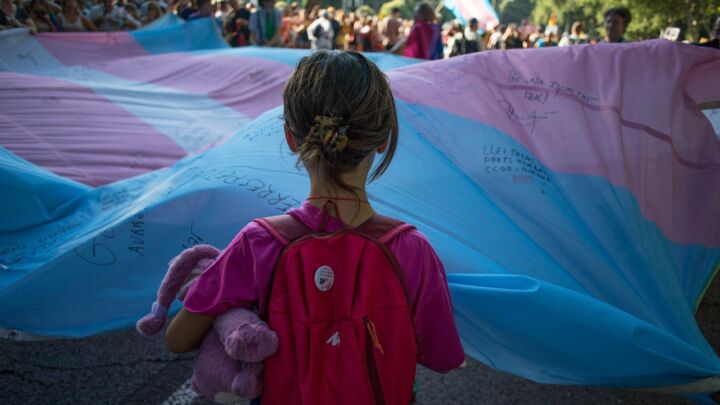
There was no mention of the fact that, in 2021, the BBC finally withdrew its educational video for primary-school kids which claimed there were more than 100 genders. But only after a two-year campaign by gender-critical organisations, like Sex Matters and LGB Alliance, as well as thousands of ordinary parents. So committed was the BBC to trans ideology that when it ‘retired’ the video, it issued a press release complaining:
‘We are aware that this particular film is being wilfully misinterpreted by parts of the media and others on social media. As such, its original purpose and intention has been overshadowed. On this basis we have made the decision to retire the film.’
Nor did the Prescott memo mention the BBC’s blatant promotion of puberty blockers in films like I Am Leo from 2014.
The BBC remains in thrall to woke activists who believe they have an inalienable right to decide what the public should get to see and hear. That belief is rooted in the BBC’s heritage, a thread that runs from Reith through Yentob to the present day.
Perhaps when these self-appointed guardians of the moral high ground defend the BBC, they are really defending the unshakeable assumption they share with BBC bosses: that a certain type of person has the right to tell the rest of us how to think and behave. A type of person like them.
Malcolm Clark was LGB Alliance’s head of research from 2019 to 2022. Visit his Substack, The Secret Gender Files, here.
You’ve hit your monthly free article limit.
Support spiked and get unlimited access.
Support spiked and get unlimited access
spiked is funded by readers like you. Only 0.1% of regular readers currently support us. If just 1% did, we could grow our team and step up the fight for free speech and democracy.
Become a spiked supporter and enjoy unlimited, ad-free access, bonus content and exclusive events – while helping to keep independent journalism alive.
Monthly support makes the biggest difference. Thank you.

Comments
Want to join the conversation?
Only spiked supporters and patrons, who donate regularly to us, can comment on our articles.