Why trans is a mental-health issue
Treating gender distress as a question of ‘identity’ is failing the most vulnerable.
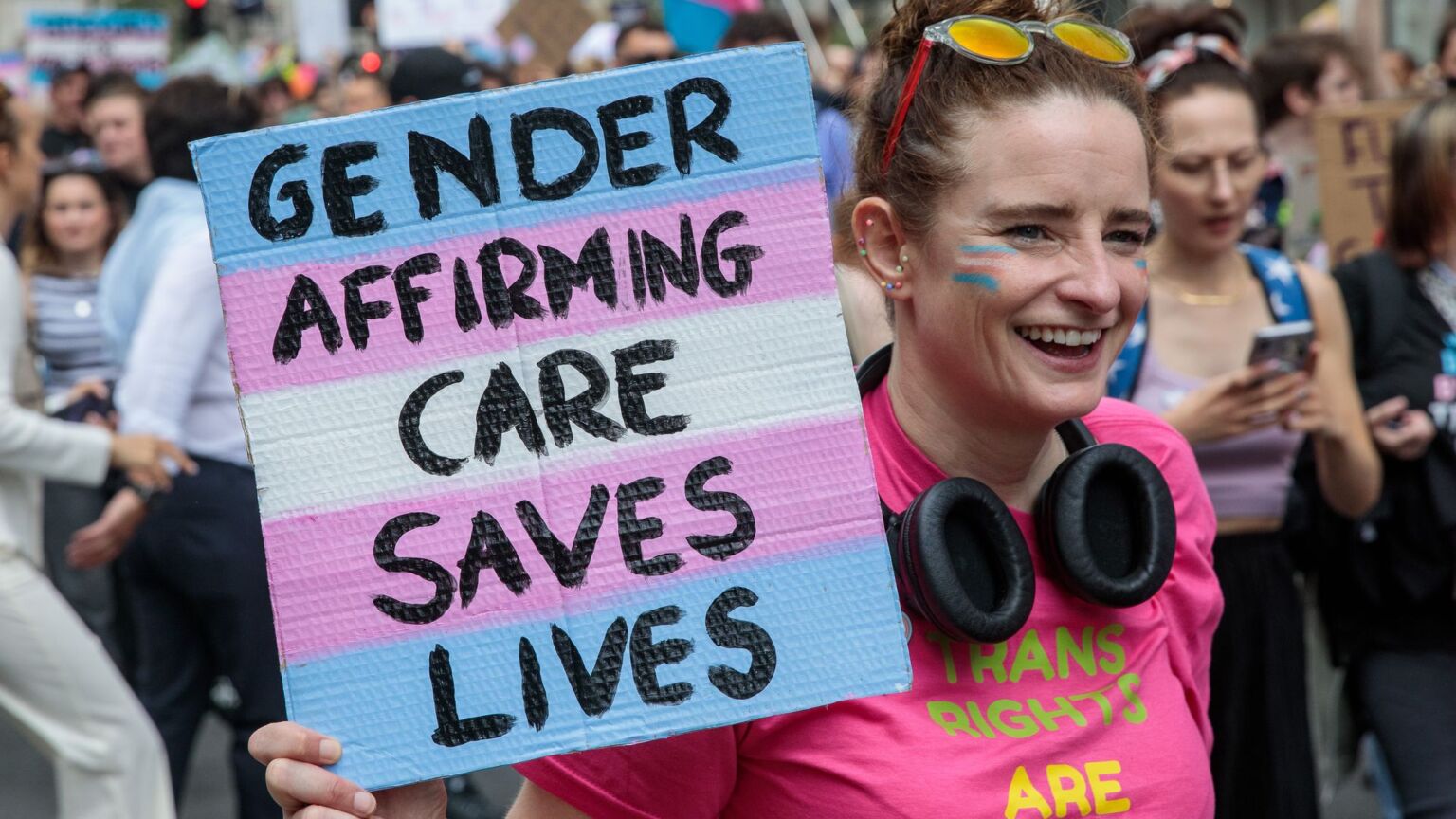
Want unlimited, ad-free access? Become a spiked supporter.
One of the most troubling features of the trans debate is the collapse of leadership from those who should know better. Doctors and clinicians, trained to think clearly about illness, risk and harm, have retreated into euphemism and evasion. In their silence, parents, teachers, journalists and vulnerable people are left struggling to make sense of a complex psychological phenomenon.
The LGBT movement quickly stepped into this vacuum. It insists that it is ‘stigmatising’ to frame the urge to medically transition as a mental-health issue. This claim may sound compassionate but it itself rests on a deeply stigmatising premise: that mental illness is something shameful, degrading or morally suspect. It rejects the idea that mental illness is part of the human condition – and that clinical care exists precisely to understand it, respond to it and alleviate suffering. The problem is not that gender-related distress has been treated as a mental-health issue. The problem is that mental illness itself has been treated as an insult.
This shift was not accidental. In 2010, the World Professional Association for Transgender Health (WPATH) made a deliberate decision to promote the ‘de-psychopathologisation’ of gender variance worldwide. Psychiatric classification was reframed as a source of stigma rather than a clinical tool. Governments and medical bodies were urged to revise policy accordingly.
The aim was not merely to reduce discrimination, which would have been laudable, but also to redefine transgender identity and medical transition as ‘a common and culturally diverse human phenomenon, which should not be judged as inherently pathological’. The result was a decisive shift away from a mental-health framework and towards an identity-based one. The consequences have been far-reaching. Well-documented risks associated with medical transition – including infertility, impaired sexual functioning, chronic pain, osteoporosis and other long-term complications – were pushed to the margins. In their place emerged a narrative in which medical transition was recast as a celebratory journey of self-discovery, rather than a serious clinical intervention carrying significant and lasting risks.
In my work as a practising psychotherapist, I have watched the trans debate unfold with a growing sense of despair. By 2012, WPATH’s Standards of Care no longer treated clinicians as independent professionals capable of helping people think their way through distress. Instead, we were recast as facilitators of medical transition.
Psychotherapy ceased to be a space for reflection and exploration and became a box to be ticked on the way to hormones and surgery. Today, as a direct consequence of WPATH’s political campaign, careful therapeutic inquiry is routinely dismissed as ‘conversion therapy’, rather than recognised as a legitimate attempt to relieve suffering through understanding.
In 2013, the Diagnostic and Statistical Manual of Mental Disorders replaced ‘gender-identity disorder’ with ‘gender dysphoria’. This was widely presented as a scientific update. It was nothing of the sort. There was no new discovery and no breakthrough in understanding. This was a political decision designed to remove the implication that identity itself could be disordered, while retaining just enough diagnostic language to keep medical pathways open.

The political momentum continued. In 2016, WPATH declared the medicalisation of a self-perceived and unfalsifiable gender identity to be ‘medically necessary’. This ensured insurance coverage in the United States and, in doing so, locked a flawed understanding of gender distress into healthcare systems across the world. In 2018, the World Health Organisation and the International Classification of Diseases reframed the issue yet again, relabelling it ‘gender incongruence’ and removing it from the mental-health chapters altogether. It was instead placed in a newly created chapter on ‘sexual health’. By this logic, a girl’s childhood desire to be a boy would be treated as a sexual-health problem.
By 2022, WPATH’s latest Standards of Care completed the political project that began in 2010. Age limits for irreversible interventions were removed, while expressions of clinical caution were recast as bigotry. Any clinician who viewed gender-related distress as transient, developmentally bound or psychologically mediated was deemed guilty of ‘conversion therapy’.
This is not how clinical practice usually works. As a clinician, my job is to distinguish between normative, developmentally typical behaviour and signs that something more troubling may be taking hold. I am trained to look for early warning signs, patterns of escalation and risk factors that suggest a problem is becoming more serious. Early intervention can reduce severity, improve quality of life and sometimes prevent long-term harm altogether. None of this is controversial in any other area of healthcare. And yet, when it comes to gender distress, we are told to abandon this entire framework.
A useful analogy is anorexia. A teenager going on a diet is not mentally ill, just as a young person experimenting with identity labels is not, in itself, pathological. But when dieting becomes extreme, rigid and self-punishing, clinicians recognise it as something more serious. We do not affirm this behaviour as an authentic expression of the self – we intervene. The urge to medically transition, to weaken a healthy body through irreversible interventions, closely mirrors the anorexic’s drive to control the body through starvation. In both cases, the behaviour is experienced as necessary, even virtuous. In both cases, clinicians are meant to see what the patient cannot.

Mental illness has degrees. Escalation happens quickly for some and not at all for others. Not every extreme dieter develops anorexia. Not every gender-distressed person seeks medical transition. But pretending escalation does not exist, or that it carries no risk, is not kindness. It is clinical neglect. This is why Genspect, the organisation I founded in 2021, is calling for the re-pathologisation of the urge to medically transition. Since 2010, WPATH’s political campaign has created untold chaos. The task now is to restore clinical clarity to a form of distress that has been weaponised and politicised.
If activists continue to intimidate clinicians into submission, vulnerable people will pay the price. What is needed now is clarity, and clinicians willing to speak plainly about diagnosis, risk and appropriate treatment. Treating self-perceived identities as conditions requiring extreme bodily modification is not compassion – it is an abdication of professional responsibility.
Stella O’Malley is the director and founder of Genspect.
You’ve hit your monthly free article limit.
Support spiked and get unlimited access.
Support spiked and get unlimited access
spiked is funded by readers like you. Only 0.1% of regular readers currently support us. If just 1% did, we could grow our team and step up the fight for free speech and democracy.
Become a spiked supporter and enjoy unlimited, ad-free access, bonus content and exclusive events – while helping to keep independent journalism alive.
Monthly support makes the biggest difference. Thank you.






Comments
Want to join the conversation?
Only spiked supporters and patrons, who donate regularly to us, can comment on our articles.