Why Trumpism is here to stay
Christopher Caldwell looks back on the first year of Donald Trump’s second term.
Want unlimited, ad-free access? Become a spiked supporter.
Love him or loathe him, Donald Trump has proven himself to be an era-defining politician. In his first year since returning to the White House, he has upended domestic US politics and the international order. He has gone to war with woke, challenging trans ideology and affirmative action, and taken aim at globalism, championing tariffs and immigration controls over porous borders and free trade. He has also rewritten the rules of foreign policy, pulling away from Europe while intervening far more forcefully in the Western hemisphere. What does all this mean for America and the West? And can ‘Trumpism’ outlast The Donald himself?
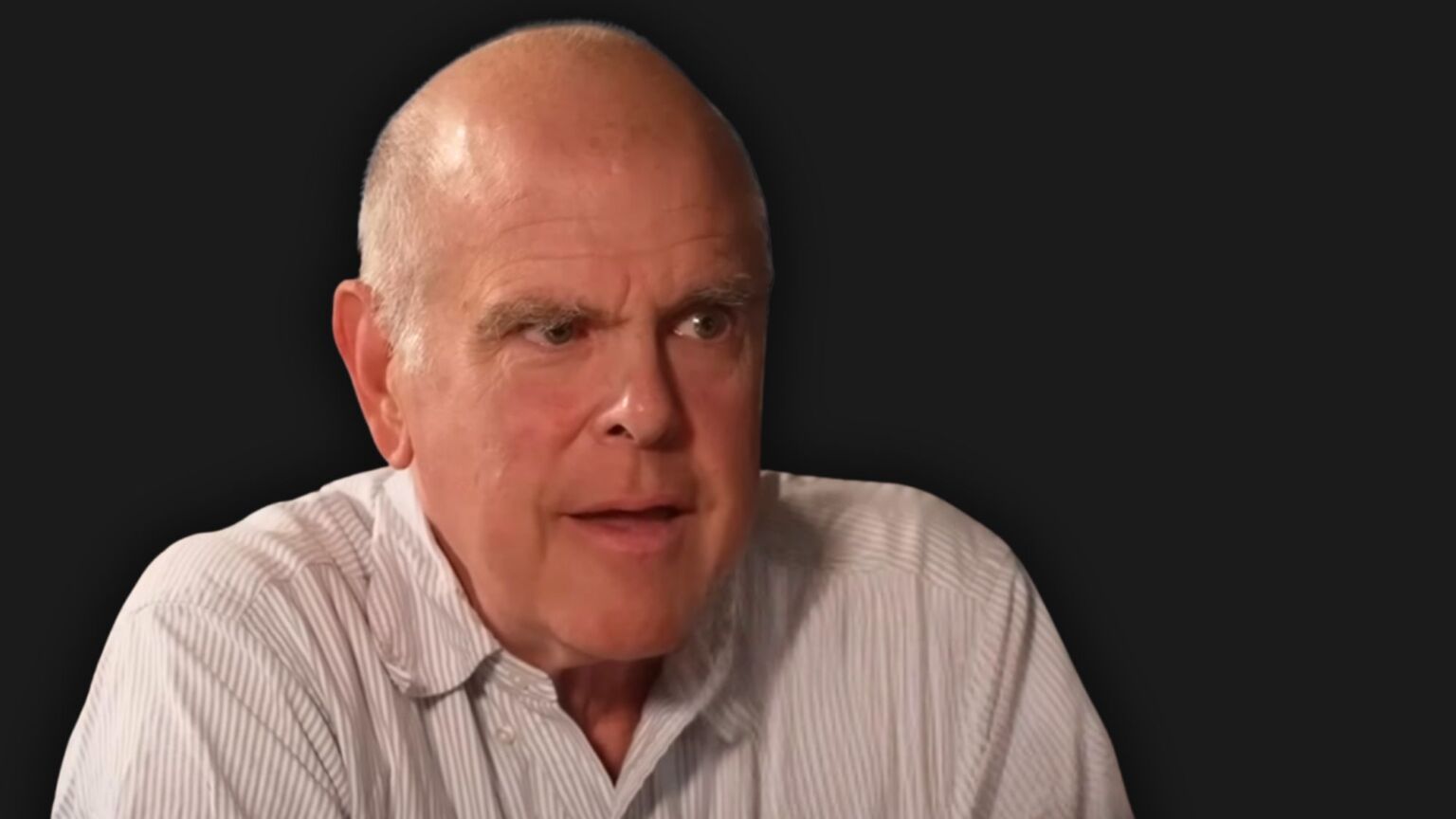
Christopher Caldwell – author of Reflections on the Revolution in Europe and contributing editor of the Claremont Review of Books – joined Brendan O’Neill on his podcast, The Brendan O’Neill Show, to discuss all these questions and more. What follows is an edited excerpt from that conversation. You can watch the full thing here.
Brendan O’Neill: What’s your scorecard on how Trump has done over the past year?
Christopher Caldwell: In one respect, I think the second Trump administration has been a shockingly unexpected success, particularly in terms of staffing, dynamism and efficiency. For various reasons, the first Trump administration never really got off the ground. If you talk to Trump people, they stress the scandals and investigations that kept them wrong-footed for the entirety of that term. They never really got organised. Trump had zero legislative achievements aside from a tax cut, and really zero achievements of any kind, aside from nominating Supreme Court justices – which was certainly significant – and keeping the US, for the most part, out of fresh wars.
In the second administration, a lot of people expected the same. Even Trump partisans were mostly looking for a respite from Obama-Bidenism, from a lot of the woke stuff, and from the drift that came from having a president who was a little bit absent. But the shocking energy of this Trump administration has caught everyone by surprise. The effectiveness of closing down the border – which, with good reason, appeared porous for much of the Biden administration – has changed the way a lot of Americans think about Trump.
That said, he exhausts the public now as in the past, and his popularity (while higher than in his last term at this point) has sagged since the opening days of his presidency. Midterms are always difficult for sitting presidents, particularly in a second term, and he’s not going into 2026’s Midterms in a particularly strong position. That could change, but he looks a little soft in the polls right now.
O’Neill: There was a real sense of hysteria during Trump’s first term. Has that withered now?
Caldwell: This is a very complicated and tangled question. On the one hand, Trump has managed, in the second term, to do something many expected in the first but never really saw: bring the opposition to wokeness out from under the surface. For the most part, Americans really hate woke, though it varies by social class. I think the ruling class of the country is still behind it. If you watch an NFL game, for example, you still see all these initiatives about making America a more equitable place cropping up. So wokeness remains quite entrenched in our institutions.
At the same time, I get the impression that a cat has been let out of the bag. There’s a certain over-the-top wokeness that Americans will no longer tolerate, no matter who’s in power. You could elect the most left-wing Democrat imaginable in 2028 – and we may well do that – and it would still be rougher sledding for woke.

Just to give one example: Compact magazine recently ran an extraordinary article by Jacob Savage about his experience trying to find work as a screenwriter, and the experience of many of his contemporaries. He’s speaking for young men – post-millennial, just entering the job market over the past decade – and he presented remarkable data about the generational impact of wokeness. When people say the film industry is woke, there are always white people who come out and say, ‘No, it’s fine, it’s all great’. The same happens in academia. But he showed, very clearly, that you have to measure the impact generationally.
You have Baby Boomers and Gen Xers who are grandfathered into positions of authority, but below that, an entire social experiment was being carried out on white males under the age of 30. If they try to start a career in academia, film or a whole range of other fields – even law or medicine, where credentials are required – they find they’re out of luck. Savage’s article cited striking statistics: Brown University has hired 45 tenure-track professors in the social sciences and humanities over the past decade, and only three of them were white males. You’re down to single-digit percentages.
I say all this only to suggest that, with generational change, there’s a growing understanding of what Trump is trying to do. Whether or not it was his original plan, the ‘anti-woke agenda’ has become attached to him – and there is now a very natural constituency for this among younger voters.
O’Neill: Trump’s second term has also forefronted conversations about the border – not just the free movement of people, but of goods, too. Could this hurt the Trump project if it damages the economy?
Caldwell: Something happened during the first three years of Trump’s presidency – 2017 to 2019, before Covid – that I still find striking. You saw economic growth, but at a slower rate than under Obama. The economy slowed because of Trump’s policies, but the benefits were more widely shared.
Because so much economic commentary is done by people near the top of the income distribution, we tend to assume the economy is doing well if the stock market is rising and investment bankers are getting raises. But there’s a lot of invisible progress in an economy with restrictive immigration and, perhaps, restricted trade. It may be that many people are benefitting, even if the top-line numbers appear stagnant. That’s what happened during the first Trump administration. For the first time since the 20th century, the bottom quartile of earners advanced relative to everyone else. Natural majorities can emerge organically under those conditions.
Christopher Caldwell was talking to Brendan O’Neill. Watch the full conversation below:
You’ve hit your monthly free article limit.
Support spiked and get unlimited access.
Support spiked and get unlimited access
spiked is funded by readers like you. Only 0.1% of regular readers currently support us. If just 1% did, we could grow our team and step up the fight for free speech and democracy.
Become a spiked supporter and enjoy unlimited, ad-free access, bonus content and exclusive events – while helping to keep independent journalism alive.
Monthly support makes the biggest difference. Thank you.




Comments
Want to join the conversation?
Only spiked supporters and patrons, who donate regularly to us, can comment on our articles.