Long-read
An elegy to Oxford Street
This most storied of thoroughfares will soon be remade and vandalised to align with Sadiq Khan’s soulless vision.
Want unlimited, ad-free access? Become a spiked supporter.
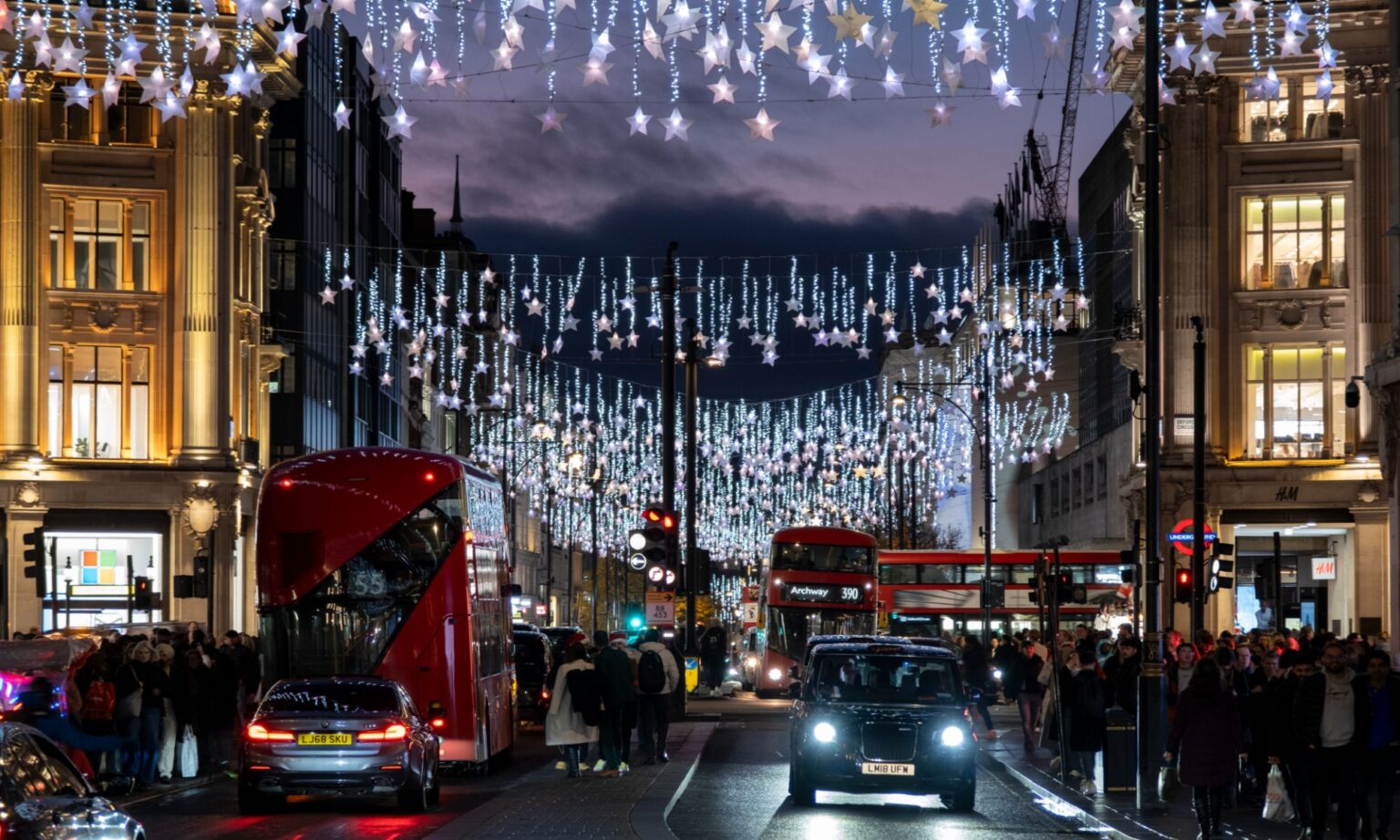
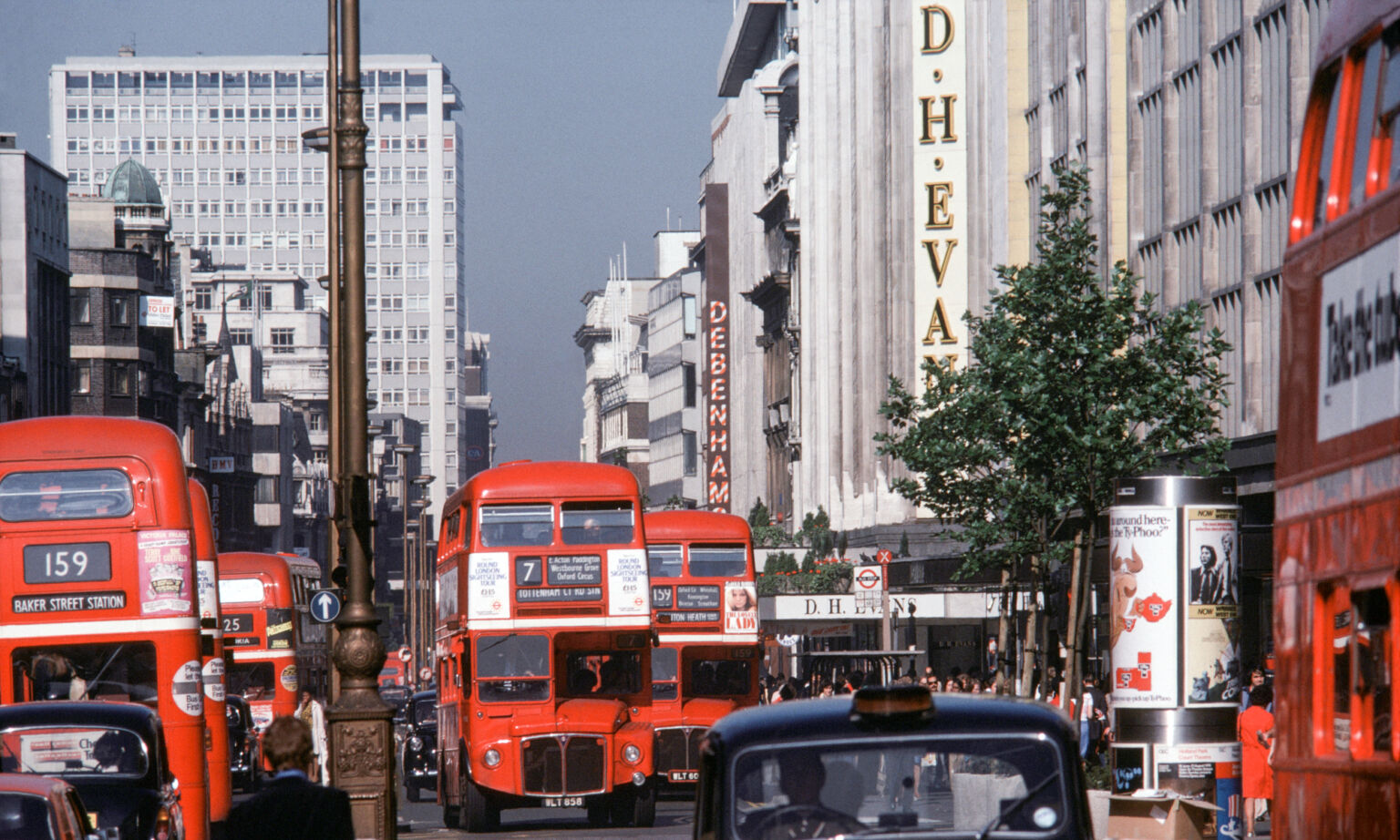
In her 1932 essay, ‘Oxford Street Tide’, Virginia Woolf writes that modern London is not built to last but built to pass: ‘The mere thought of age, of solidity, of lasting forever is abhorrent to Oxford Street.’ The stretch of road that connected Newgate Prison to Tyburn gallows, currently enhanced by Christmas lights, a tradition harking back to 1959, has undergone multiple changes. Yet soon it will be subjected to a development that divorces it from its past almost completely. That’s because 1.1 kilometres of Oxford Street, from Orchard Street to Great Portland Street, and potentially up to Tottenham Court Road, is set to be pedestrianised.
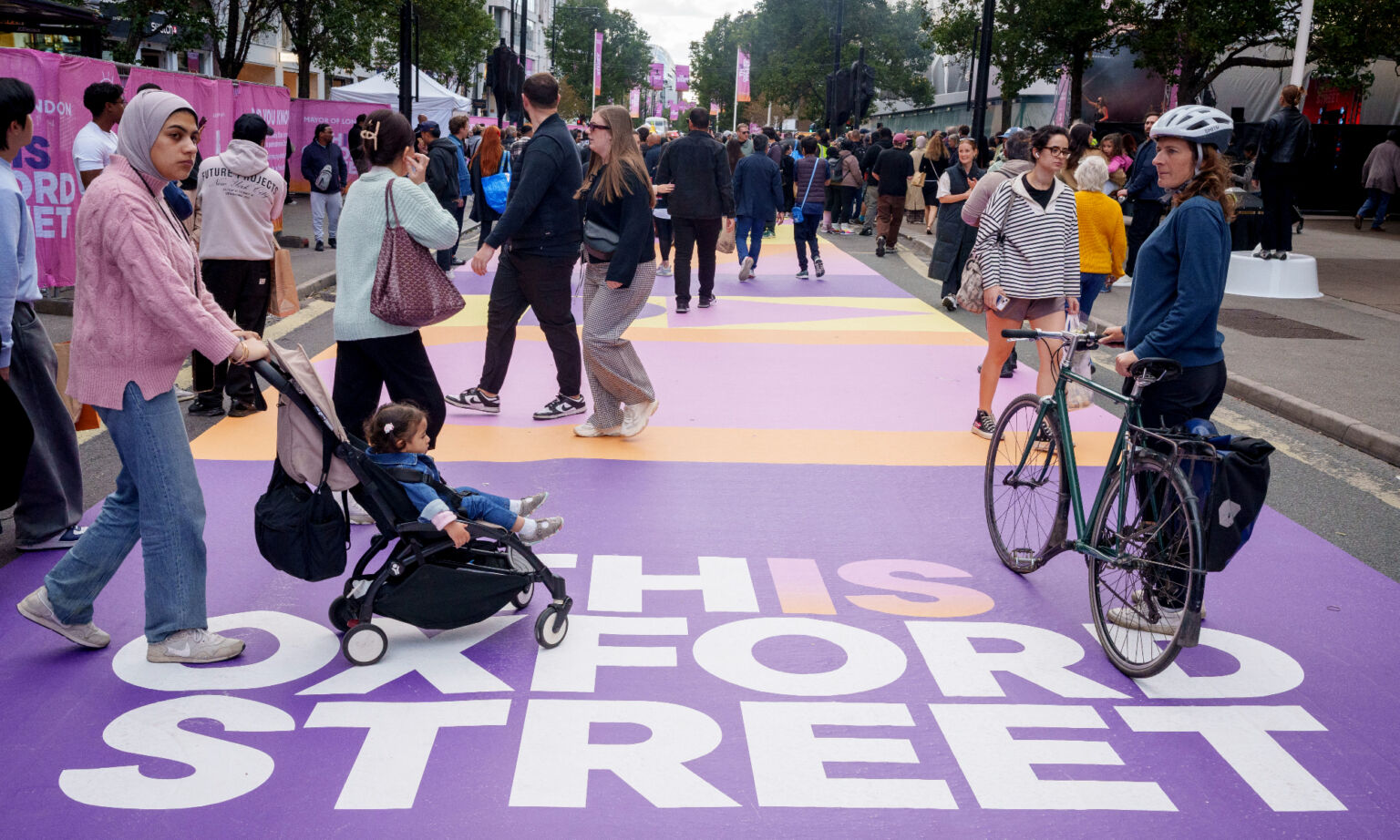
Having passed the consultation stage, work is expected to begin in 2026, under the management of a new Mayoral Development Corporation. Previous London mayors posited the idea, but the current incumbent, Sadiq Khan, intends to bring it to fruition ‘as soon as possible’. Khan proposed this in 2016, the first year of his tenure, only to be blocked by Westminster City Council and a lack of public enthusiasm. He now claims the support of the capital’s residents, with seven out of 10 in favour of change. ‘It’s clear that the vast majority of Londoners and major businesses back our exciting plans’, he informed us earlier this year.
Plazas are promised, lined with trees and seating areas. The word ‘boulevard’ is bandied about to elevate the leisurely shopper to a Baudelaire-like flâneur, promenading a thoroughfare worthy of Haussmann, the visionary architect of modern Paris. There will be ‘outdoor dining’ and ‘public art’ – street-food stalls and living statues, perhaps.
According to the London mayor’s mission statement for the project: ‘Our plans are not only about creating a beautiful public space where people can shop, eat and connect, but transforming Oxford Street into a place Londoners and the whole of the country can be proud of, as we continue to build a better London for everyone.’ The scheme feeds Khan’s fantasy of a vibrant city in which life is a festival. It perpetuates the myth of the capital as a multicultural utopia so essential to Khan’s mantra: diversity is our strength. It chimes with events he’s mentioned elsewhere that epitomise modern London: Eid in the Square, the Ramadan Lights, Notting Hill Carnival and Pride. When a Pride march converged at the junction at Oxford Circus in 2022, Khan was centre stage rallying the oncoming crowds. Gay anthems played as Angela Rayner indulged in a self-conscious shoulder roll before Keir Starmer, cast as ‘Queer Keir’, a heterosexual sexagenarian with glitter on his cheeks, followed suit.
I’ve used these lines before, but I’ll reprise them here to drive the point home. Back in 2022, Khan was welcoming his comrades to his fiefdom, his Trumpton: ‘The great thing about London is that if you’re different, you aren’t simply tolerated, you’re respected, celebrated and embraced. That’s who we are: open-minded, outward looking.’ Such statements reveal his provincial outlook. Khan is blithely oblivious to news that those beyond the M25 are familiar with the modern world, too.
Khan’s commitment to a utopian multiculturalism, coupled with his efforts to eradicate pollution with his Ultra Low Emission Zone initiative, will, he believes, shape his legacy. Yet, another issue provided the impetus for his vision of a new Oxford Street: casualties. In 2016, his office justified pedestrianising Oxford Street by referring to a fatal accident involving a person and a bus that occurred the month after Khan was first elected.
Khan flags up crime and casualty figures only when they’re expedient. He remains tone deaf to knife attacks carried out in great numbers on his watch and claimed recently to have no knowledge of the existence of grooming gangs in London. Whatever Khan believes his legacy to be, crime in London, and his disingenuous approach to it, is what he’ll be remembered for – long after the ‘holiday’ lights have dimmed on Oxford Street and the cars have disappeared. Much of the criticism levelled at the capital’s first Muslim mayor is dismissed by his defenders as ‘Islamophobia’. Ricky Gervais highlights a more pressing concern in an ad for his Dutch Barn vodka brand that has popped up at Tube stations: ‘Welcome to London. Hold on to your phone.’
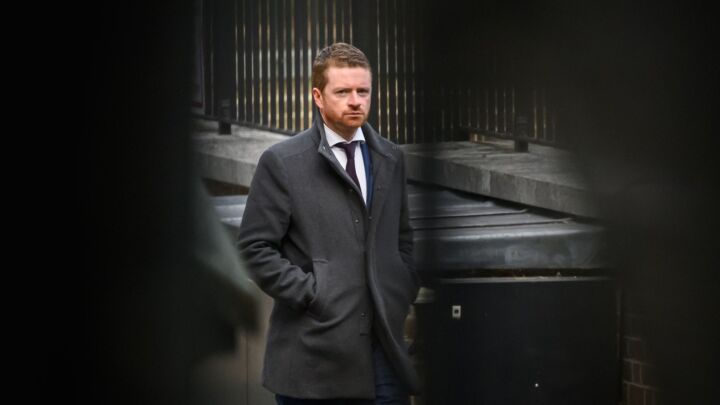
Someone who directly challenged Khan’s record, as a UKIP member of the London Assembly, was Peter Whittle, who died last month aged 64. He also established the Westminster-based think-tank, the New Culture Forum, producing numerous successful YouTube documentaries, among other notable projects. His passion for his native London, his knowledge of its history, is evident in the 2023 documentary he fronts, entitled A London Lost: Death of an English City. Peter first contacted me 20 years ago when I wrote about the demonisation of working-class white people in The Likes Of Us, proudly informing me his late father had managed a gym on the Old Kent Road, a thoroughfare crucial to the backdrop of the book. In recent years, he referred to a later paragraph I’d written, as it resonated with his experience of London in middle age:
‘Those of us who made the voyage out and live like expats with ambivalent memories of the old country, seek out familiar relics on return trips for funerals, among other things – not in the name of nostalgia but history, to remind ourselves we once existed on streets we now walk as ghosts. We seek out those red-brick monoliths that recall the civic nature of the neighbourhood – town halls, libraries, welfare centres, the living past in the shadowed present.’
For Whittle, a lament for a lost city was not anchored in nostalgia. Like Virginia Woolf, he was aware that London was a place built to pass; the city as palimpsest in which the ancient is evident beneath the modern. Referring to further pedestrianisation during a public talk, he expressed caution – he worried it would make England’s capital too static. ‘London isn’t a museum’, he told the audience.
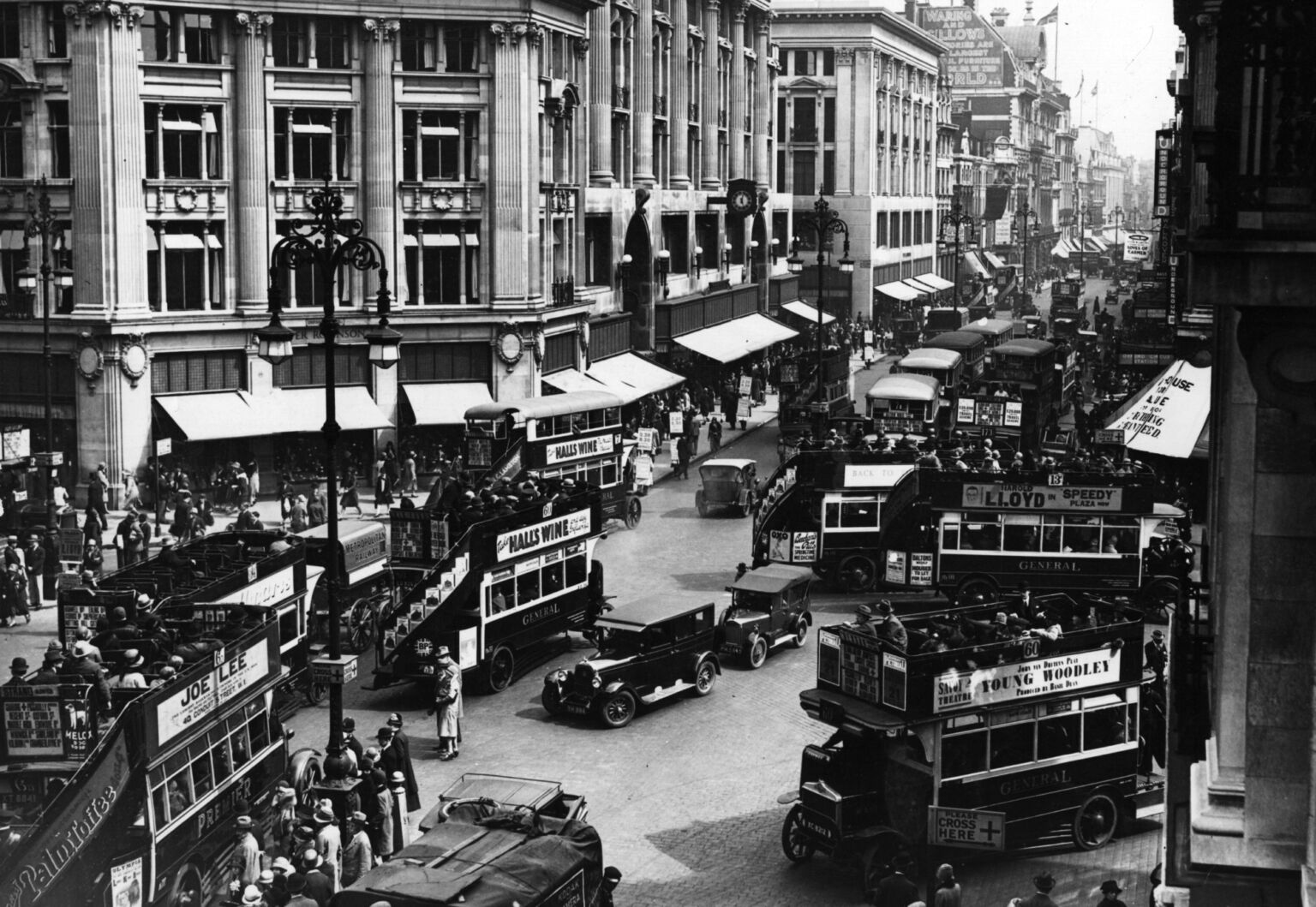
Those of us of a certain vintage have been privy to previous changes in Oxford Street and its environs, as time and the city took us from the age of innocence to the age of experience and beyond. On the classic Monopoly board, Oxford Street, for sale at £300, was the property those of us born close to Old Kent Road, the cheapest at £60, wanted to own houses and hotels on. It continues to attract roughly 500,000 pedestrians each day, and contributes an estimated £25 billion per year to the capital’s economy.

According to Woolf, Oxford Street was full of sales and bargains in 1932: ‘Moralists have been known to point the finger of scorn at those who buy there… [But] even a moralist must allow that this gaudy, bustling, vulgar street reminds us that life is a struggle; that all building is perishable…’ In Confessions of An English Opium-Eater (1821), Thomas De Quincey writes: ‘So, then, Oxford Street, stonyhearted stepmother, thou that listenest to the sighs of orphans, and drinkest the tears of children.’ By 1988, Tracey Thorn of Everything but the Girl spoke to young suburban day trippers of her generation as she sang: ‘When I was 17, London meant Oxford Street.’
It was this gaudiness that Woolf mentions that called us up west from the cheapest street on the Monopoly board, across Westminster Bridge from the wrong side of the Thames, to shop, work and sometimes steal. Oxford Street was the destination for the ‘Forty Thieves’, the infamous female gang from Elephant and Castle, who plied their trade between 1870 and the 1950s. Some of us were aware of female ‘hoisters’ carrying on the tradition throughout the 1970s. By the 1980s, they were taking orders for designer clobber for local football casuals: Tacchini, Lacoste, Pringle. Despite the proximity of the wealthy West End, it was another world, one that six stops on the Bakerloo Line from the Elephant brought us to. King’s Road was too far, Bond Street too exclusive.
High streets across the country are struggling and in need of solutions in order to survive. Online shopping, retail parks and the Covid quarantine contributed to bringing them to this juncture. Many are peppered with vape shops, along with an abundance of Turkish barbers and Vietnamese nail bars, all of which are reportedly fuelling the black economy and the illegal-immigration industry. On Oxford Street, the proliferation of US candy stores brought investigations following accusations of money laundering.
Oddly, souvenir outlets have flourished. Whatever racket these conceal, if any, the shelves are filled with miniature relics from another London. Not because the artefacts, monuments and iconic images they depict are gone, but because they’ve been so defaced and brutalised they are incidental props on a trashed London set, where frequent scenes of savagery and carnage occur.
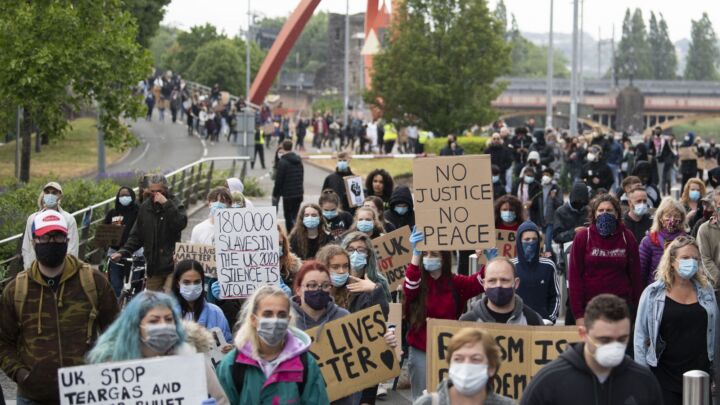
I’m thinking of Ivor Roberts-Jones’s statue of Churchill in Parliament Square, with ‘is a racist’ sprayed on its plinth during the Black Lives Matter riots in 2020. I’m thinking of the letters ‘BLM’ scrawled beneath ‘The Glorious Dead’ on Sir Edwin Lutyens’s Cenotaph on Whitehall. I’m thinking of the barriers and armed sentinels clogging the thoroughfares of Westminster to prevent further attacks from Islamist extremists.
Oxford Street, which covers three postcodes, has seen its share of upheaval this century, beginning with the May Day, Monopoly-themed anti-globalisation protest in 2001. Over the past decade, we’ve seen blockades on Oxford Street carried out by Black Lives Matter and Extinction Rebellion among others. Those participating in these protests are spoilt for choice when it comes to causes, and they pick them with the same ease bystanders shopping on Oxford Street choose their purchases, but with less discrimination. Yet, on Oxford Street, too, there are iconic images rooted in our collective memory that remain untarnished.
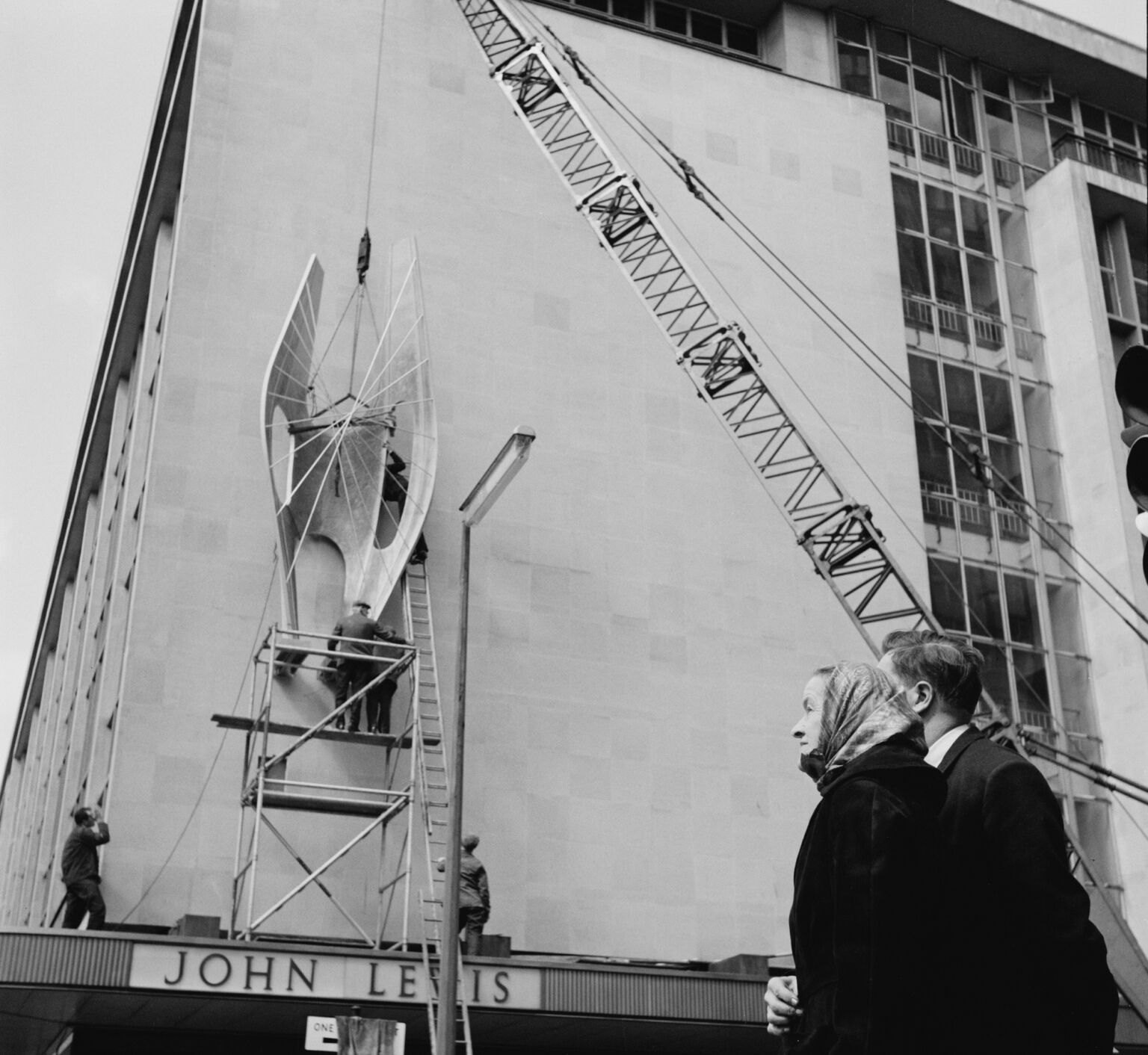
I’m thinking of Barbara Hepworth’s Winged Figure (1963) mounted on the side of the John Lewis building. The store will doubtless survive changes wrought by future plans, as surely as it survived the fire that almost destroyed it during wartime bombing in the 1940s, and the IRA bombs that exploded close to Christmas 1992. For my part, I survived a stint at John Lewis before being sacked from a Saturday job at the fag end of the 1970s. I’d progressed to Oxford Street from Regent Street, where I’d been stationed at Boots since summer 1976, when Oxford Street witnessed the birth of a movement as its 100 Club staged the Sex Pistols’ infamous Punk Rock Festival.
Then there’s Gilbert Bayes’s Queen of Time clock perched over the Art Deco entrance to Selfridges since 1931. The store will also survive, as it survived the damage from V2 rockets in December 1944. (A secure ‘hotline’ was installed in the store’s sub-basement connecting Churchill to Roosevelt.) The Sex Pistols’ former manager, Malcolm McLaren, placed the characters of Gordon Selfridge and Thomas de Quincey in his film, The Ghosts of Oxford Street, broadcast on Channel 4 on Christmas Day 1991. He claimed his mother had been a lover of the business magnate, Charlie Clore, who purchased Selfridges in 1965. As an art student in the 1960s, McLaren staged a situationist event there, arriving in Santa Claus garb and giving the store’s toys to children, as a challenge to Christmas consumerism.
I’m also thinking of the Art Deco facade of the Pantheon in sleek black granite, designed by Robert Lutyens, which opened in 1938 – 18 years earlier, his father’s Cenotaph was unveiled on Armistice Day, two years after the end of the First World War. The Pantheon housed the Marks & Spencer flagship store, which remains in the building today, even though it’s not the port of call it once was. That’s the privilege of IKEA several doors down, which opened in May this year within the 1920s building that was previously home to Topshop. In life during wartime, the basement of the Peter Robinson department store was converted into a secure studio for the BBC, where George Orwell was among those broadcasting. The living past in the shadowed present.
The Néo-Grec Orchard House, also home to Marks & Spencer, at the Marble Arch end of Oxford Street, is the next iconic building up for refurbishment. Created as a Lyon’s Corner House in 1931, and aesthetically, a sympathetic neighbour to Selfridges, the building was protected from redevelopment by successive administrations. Angela Rayner, when secretary of state for housing, removed the protection, agreeing to its demolition and its revival as a 10-storey building with offices, a gym and an arcade. This is the point where the pedestrianisation of Oxford Street will begin – it’s part of the plan from the company responsible for turning part of Tottenham Court Road into a ‘pedestrian peninsula’ in 2021, and transforming New York’s Times Square.
It’s unlikely these changes will bring about the revitalised Oxford Street, the ‘London for everyone’, Sadiq Khan envisages. Politicians’ attempts to impose their creative visions on people are always follies. Boris Johnson, London mayor between 2008 and 2016, allocated £43million for a so-called garden bridge across the Thames that was never constructed, and which Khan withdrew support for when he took office. Johnson also attempted to improve Oxford Street, introducing the current crossing system at Oxford Circus, where Queer Keir and Rayner the disco queen later danced themselves dizzy during Pride.
The spanking new Oxford Street will include a proposed 800-metre-long artwork that would cover the former road with light installations above and harlequin shapes below. We can assume this will be in keeping with exhibits Khan has previously supported, such as those that grace the fourth plinth on Trafalgar Square as Nelson looks on from his column, no doubt wishing he’d been blinded in both eyes. Currently the plinth features 726 plaster cast faces of trans and nonbinary models, mostly sex workers. This will be replaced in 2026 by Tschabalala Self’s bronze sculpture, Lady in Blue, which pays homage to ‘a contemporary, metropolitan woman of colour’. To the philistines among us, the exaggerated features of this forthcoming exhibit summon thoughts of the Aunt Jemima caricature relegated to the racism of history along with Uncle Ben, mammy maids and cakewalking minstrels.
Ultimately, Sadiq Khan’s embrace of London’s future is as crass as his efforts to erase its past – whether it’s building a new Oxford Street, banishing statues and the names of streets or train lines that fail to the match the criteria of diversity trends, or claiming promotional material featuring a white family ‘doesn’t represent real Londoners’.
These trends, like Khan’s tenure as mayor, will pass. As surely as modern London was built to pass, as Virginia Woolf pointed out. We too will pass, along with the memories of the streets we lived on in the city that made us, where we took Saturday jobs as teenagers and where as adults, we wonder like ghosts, finding the living past in the shadowed present, as Noel Coward succinctly put it in ‘London Pride’. As Woolf reminds us, as Oxford Street reminded her, life is a struggle and all building is perishable.
Michael Collins is a writer, journalist and broadcaster. He is the author of The Likes Of Us: A Biography of the White Working Class.
£1 a month for 3 months
You’ve hit your monthly free article limit.
Support spiked and get unlimited access.
Support spiked – £1 a month for 3 months
spiked is funded by readers like you. Only 0.1% of regular readers currently support us. If just 1% did, we could grow our team and step up the fight for free speech and democracy.
Become a spiked supporter and enjoy unlimited, ad-free access, bonus content and exclusive events – while helping to keep independent journalism alive.
———————————————————————————————————————————–
Exclusive January offer: join today for £1 a month for 3 months. Then £5 a month, cancel anytime.
———————————————————————————————————————————–
Monthly support makes the biggest difference. Thank you.


Comments
Want to join the conversation?
Only spiked supporters and patrons, who donate regularly to us, can comment on our articles.