We need to calm down about the ‘super-flu’
The calls for mask mandates and restrictions to protect the NHS are a depressing throwback to Covid-era authoritarianism.
Want unlimited, ad-free access? Become a spiked supporter.
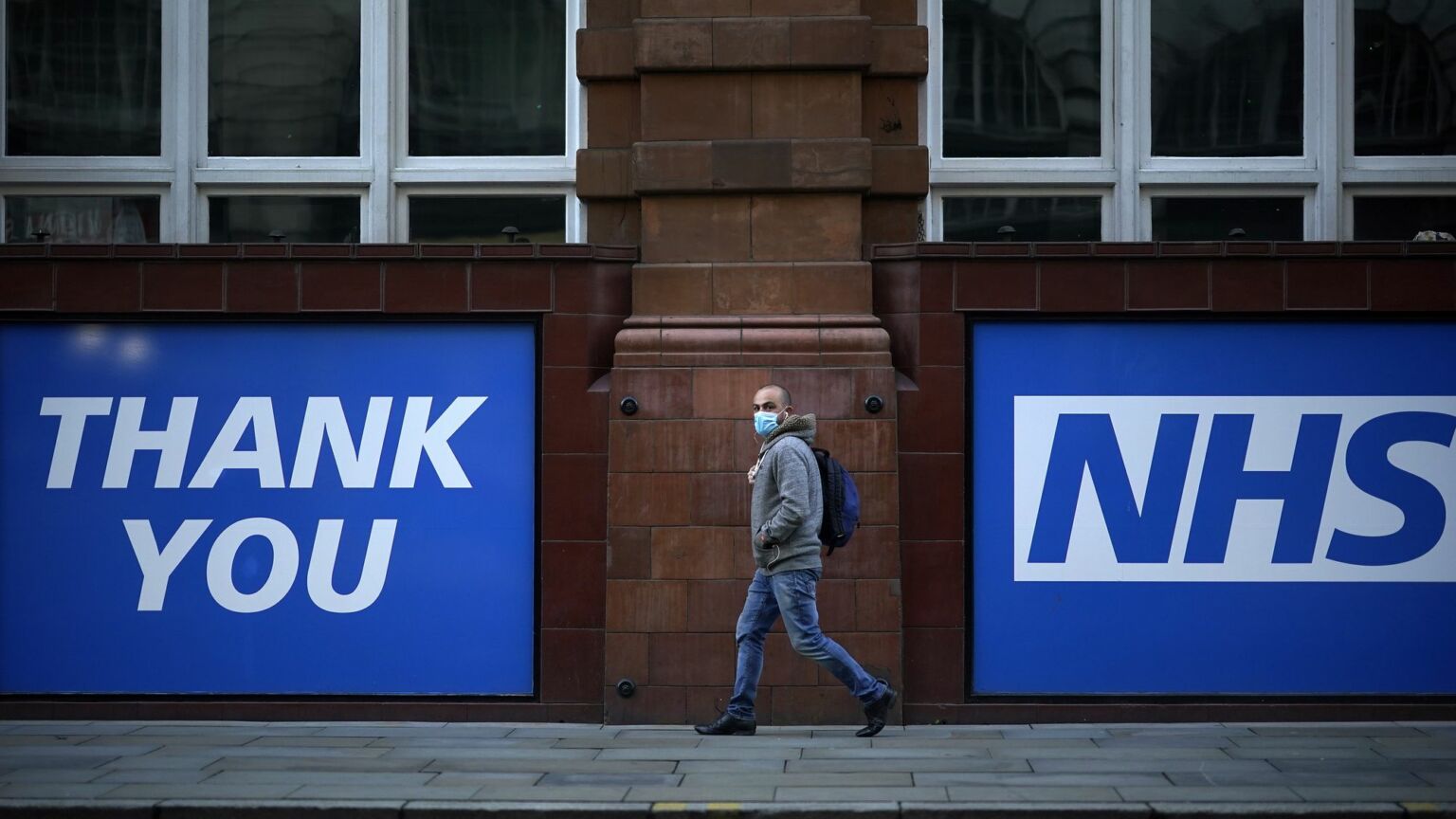
One of the gnawing fears of the Covid era was that mask wearing, social distancing and lockdowns might become a routine part of life, even long after the pandemic had ended. The response to the current flu season, in which schools have been closed, and where senior NHS officials have told the public they ‘must’ wear masks if they are ill – show that these concerns were not entirely unfounded. The UK has not, fortunately, approached anywhere near the authoritarianism that marred our lives during lockdown. But there are certainly shrill, panicked orders being issued.
It began on Tuesday, with the chief executive of NHS Providers, Daniel Elkeles, speaking to Times Radio. ‘[I]f you are coughing and sneezing, but you are not unwell enough to not go to work, you must wear a mask in a public space, including on public transport’, he said. ‘We were all very good about infection control during Covid. And we really, really need to get back to that now.’
His NHS colleagues have amplified the fear. Meghana Pandit, the national director at the NHS, said that England is experiencing an ‘unprecedented wave of super-flu’, which was ‘leaving the NHS facing a worst-case scenario for this time of year’. Chris Streather, the medical director for the NHS in London, warned that a ‘peak was not yet in sight’ in terms of hospitalisations. NHS England chief executive, Sir Jim Mackey, said that up to 8,000 hospital beds would be filled ‘by the weekend’. ‘It feels very much like the pandemic’, staff at the Darent Valley Hospital in Kent told the BBC on Thursday.
We are certainly experiencing a nasty flu season in the UK at the moment. Last week, an average of 2,660 people were hospitalised each day in England, a 55 per cent increase from the previous week. Hospitals in Scotland and Wales have experienced similar surges.
But this is not, however, ‘unprecedented’. As the BBC has noted, the winter flu seasons of 2014/15 and 2017/18 were far more severe. In fact, 20,000 people died across both of them. ‘Both were far worse than what we have seen over the past four years’, the BBC’s health correspondent, Nick Triggle, said.
Nor is the UK in the grip of a so-called super-flu. This is not a highly evolved, vaccine-resistant ‘mutant’ strain of the virus, or a ‘super-spreader’. It is ‘not more severe or harder to treat’ than any other type of flu, according to Michelle Roberts, the BBC’s health editor.
The problem is less this particular bout of flu than the authorities’ reaction to it. Just look at how many schools have responded. St Martin’s school, in Caerphilly, Wales, has announced a ‘firebreak’ closure – a phrase used by the Welsh government during Covid. Multiple schools in Cheshire have temporarily closed. Wigton Moor Primary School in Leeds has banned singing in assemblies to prevent the flu’s spread. ‘We are rehearsing for nativities at the moment and Christmas performances and we know from Covid that singing in schools is one of the worst spreaders’, Wigton Moor’s headteacher, Elaine Bown, told BBC Yorkshire.
You might be noticing familiar words, or perhaps even a familiar tone, in the response to this season’s flu. The public is being warned about the availability of hospital beds, that the worst – the ‘peak’ – is yet to come. British citizens are being implicitly reminded that they have no higher duty than to protect the NHS. In the words of health secretary Wes Streeting, the health service was facing a threat ‘unlike any it had seen since the pandemic’.
It seems the politics of fear is once again being mobilised against the public. While the pandemic is over, it seems the lust to impose stringent health measures remains. A desire to return us to the days of the ‘new normal’.
This call for a return to masks and school closures should be fiercely resisted. This isn’t simply because we are wiser than we were during the pandemic – the efficacy of mask wearing, for example, has been largely debunked. It is also because we cannot live on a knife-edge every winter, fearful that living everyday lives could be causing the collapse of the NHS.
We can only hope that political leaders keep their heads. There is at least a far stiffer resistance to health bureaucrats than there was five years ago. Opposition leader Kemi Badenoch and Reform UK’s Nigel Farage have both pushed back against any prospective mask mandate. Prime minister Keir Starmer said he was ‘not changing the guidance on face masks’.
Given his history of u-turns, Starmer’s words are hardly reassuring. It is ultimately up to us to ensure that there is no revival of Covid-era restrictions. We must refuse to give in to the fearmongering. This particular flu outbreak may be bad, but the outbreak of official flu hysteria could prove far more damaging.
Hugo Timms is an editorial assistant at spiked.
£1 a month for 3 months
You’ve hit your monthly free article limit.
Support spiked and get unlimited access.
Support spiked – £1 a month for 3 months
spiked is funded by readers like you. Only 0.1% of regular readers currently support us. If just 1% did, we could grow our team and step up the fight for free speech and democracy.
Become a spiked supporter and enjoy unlimited, ad-free access, bonus content and exclusive events – while helping to keep independent journalism alive.
———————————————————————————————————————————–
Exclusive January offer: join today for £1 a month for 3 months. Then £5 a month, cancel anytime.
———————————————————————————————————————————–
Monthly support makes the biggest difference. Thank you.
Comments
Want to join the conversation?
Only spiked supporters and patrons, who donate regularly to us, can comment on our articles.