Why Christianity transcends today’s divides
Neither Tommy Robinson nor our multiculturalist elites understand Christianity's radical universalism.
Want unlimited, ad-free access? Become a spiked supporter.
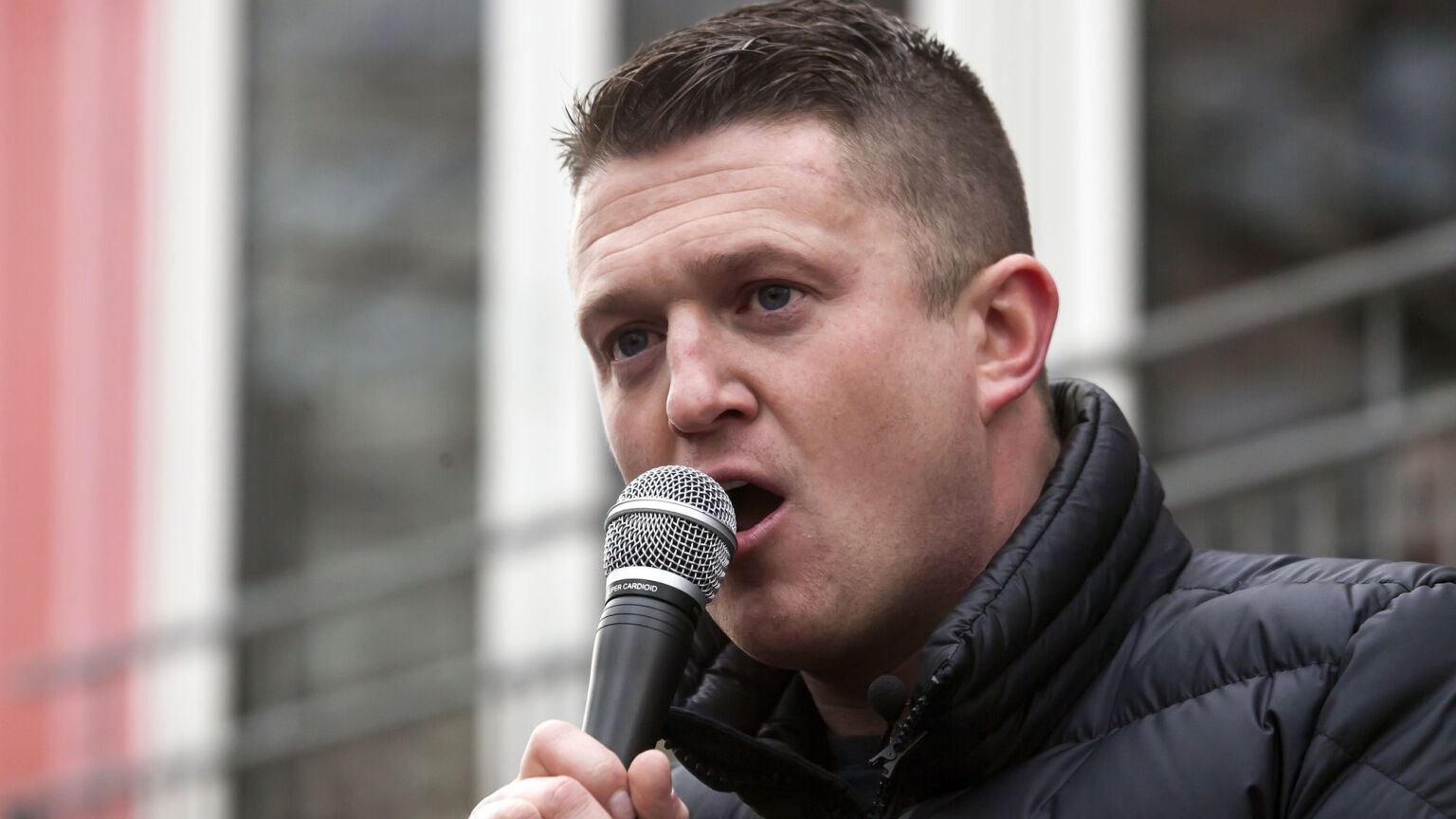
Tommy Robinson’s attempt to ‘put Christ back into Christmas’, through a Christmas-carols event in central London this weekend, is a predictably clickbaity stunt. It is precisely the kind of identitarian theatre the anti-Islam activist thrives on. Here, he presents Christianity not as a faith or a set of moral commitments, but as a cultural logo for ‘ordinary British people’.
What’s more revealing, however, is that Robinson’s stunt shares an uncanny kinship with the very multiculturalist elites he claims to despise. So while Robinson bangs on about Christianity as a marker of British national heritage, it has been reported that several schools are rebranding Christmas Jumper Day as ‘Winter Jumper Day’ in order to be culturally ‘inclusive’. Two very different worldviews are at play here, and yet both achieve the same result – they reduce Christianity (and Christmas) to a signifier of identity. Not a tradition of moral and metaphysical thought, but something almost tribal. They both strip Christianity of the very thing that made it so intellectually disruptive in the first place – namely, its universalism.
The universalism of Christianity – the insistence that all are equal before God regardless of tribe, status or bloodline – is the key principle that has shaped Western moral and cultural life. It helped dethrone the ancient world’s hierarchies. It underpinned the idea of universal human rights (long before they were reduced to slogans on NGOs’ websites). And it has fuelled countless struggles for equality, from the anti-slavery to civil-rights movements. As such, even secular humanism drinks deeply from a Christian well.
This is also why Christianity so irritates both sides of today’s identitarian divide. To Robinson and his ilk, its universalism gets in the way of the story they want to tell: that Britain is being robbed of its ‘Christian identity’ by mass migration and the craven elites who sponsor it. But Christianity, in its essence, shatters tribal belonging. It expands the circle of moral concern beyond the polis, the clan and the in-group. It proclaims that the Samaritan – the outsider – might be morally superior to the priest or the Levite. It universalises moral dignity.
That message is politically useless for Robinson. He is trying to revive Christianity as a national membership card, as if Christ were merely the patron saint of England. For him, the nativity scene is not a theological event but a nostalgic prop – a staging ground for railing against the anti-nation multiculturalists.
But the postmodern, multiculturalist critics of Christmas share a similar discomfort with the universalism of Christianity. Their politics is built on a particularist vision of fixed ethnic and racial identity blocs. They divide society up into competing identity groups. The very idea of a universal moral message – one that applies across cultures, histories and identities – is anathema to them.
So the multiculturalist shrinks Christianity down, too. Not into a signifier of Britishness like Robinson, but into a parochial, ‘culturally specific’ practice. Christianity becomes something Westerners do, something potentially oppressive, something that must be managed and neutralised. Universalist claims are rewritten as old tools of domination. The entire Christian tradition of the West becomes suspect.
What neither camp can tolerate is the idea that Christianity might articulate shared ideas or values that transcend narrow conceptions of national or cultural identity.
We have now ended up in the absurd situation in which a man who has likely not set foot in a church for years positions himself as the defender of ‘Christian Britain’. At the same time, we see institutions tie themselves in knots trying to avoid the word Christmas at all. Both sides are engaged in the same cultural reductionism. Neither is remotely interested in what Christianity actually says.
And perhaps that is the deeper problem: our society no longer knows how to treat religion as anything more than a branding exercise, as a marker of identity.
You don’t have to be a believer to find this view of religion impoverishing. Christianity’s universalism could serve as a stark rebuke to today’s identitarian divisions. At the very least, it reminds us that human beings are not reducible to Census categories.
Which is why both camps work so hard, in their own ways, to bury that universalism. It is politically inconvenient. It promises solidarity where they want separation. It invites responsibility where they want grievance. It suggests that the moral world might be bigger than the squabbles of identity politics.
Christianity’s universalism is not the problem. It is the source of its enduring value.
Neil Davenport is a writer based in London.
£1 a month for 3 months
You’ve hit your monthly free article limit.
Support spiked and get unlimited access.
Support spiked – £1 a month for 3 months
spiked is funded by readers like you. Only 0.1% of regular readers currently support us. If just 1% did, we could grow our team and step up the fight for free speech and democracy.
Become a spiked supporter and enjoy unlimited, ad-free access, bonus content and exclusive events – while helping to keep independent journalism alive.
———————————————————————————————————————————–
Exclusive January offer: join today for £1 a month for 3 months. Then £5 a month, cancel anytime.
———————————————————————————————————————————–
Monthly support makes the biggest difference. Thank you.




Comments
Want to join the conversation?
Only spiked supporters and patrons, who donate regularly to us, can comment on our articles.