Now students are being ‘triggered’ by Harry Potter
JK Rowling’s children’s fantasy has been slapped with a content warning for its supposedly ‘outdated’ attitudes.
Want unlimited, ad-free access? Become a spiked supporter.
When trigger warnings first started cropping up on university course lists, they were initially reserved for the most sensitive and serious of subjects. Think sexual abuse, genocide, torture and the like. Yet now the University of Glasgow has issued a warning to its students about the potentially dangerous, toxic and confronting content they may encounter when leafing through Harry Potter.
According to the Daily Mail, Glasgow has issued trigger warnings for a host of popular children’s books, most notably for Harry Potter and the Philosopher’s Stone, the first in JK Rowling’s seven-book instalment on the orphaned young wizard. Students of the university’s British Children’s Literature course have been warned it ‘explores outdated attitudes, abuse and language in children’s texts’. Other books that students open at their own risk include Lewis Carroll’s Alice in Wonderland and Enid Blyton’s First Term at Malory Towers.
What is supposed to be so ‘triggering’ about the Harry Potter book isn’t immediately obvious. Most undergrads will have first encountered Harry Potter and the Philosopher’s Stone back in primary school. This is probably the most confusing and disheartening aspect of the report: young adults at a university, which helped give birth to the Scottish Enlightenment and whose alumni include Adam Smith, are not only taking courses devoted to books for children, but also seem to be finding the course content a bit too emotionally taxing.
A spokesperson for the university said its ‘content advisories’ (the phrase ‘trigger warning’ is itself now deemed – you guessed it – triggering) exist to ‘help students prepare for critical discussion’. ‘Unlike children reading for pleasure, undergraduates analyse these texts in depth, which can highlight outdated attitudes around childhood, race or gender.’
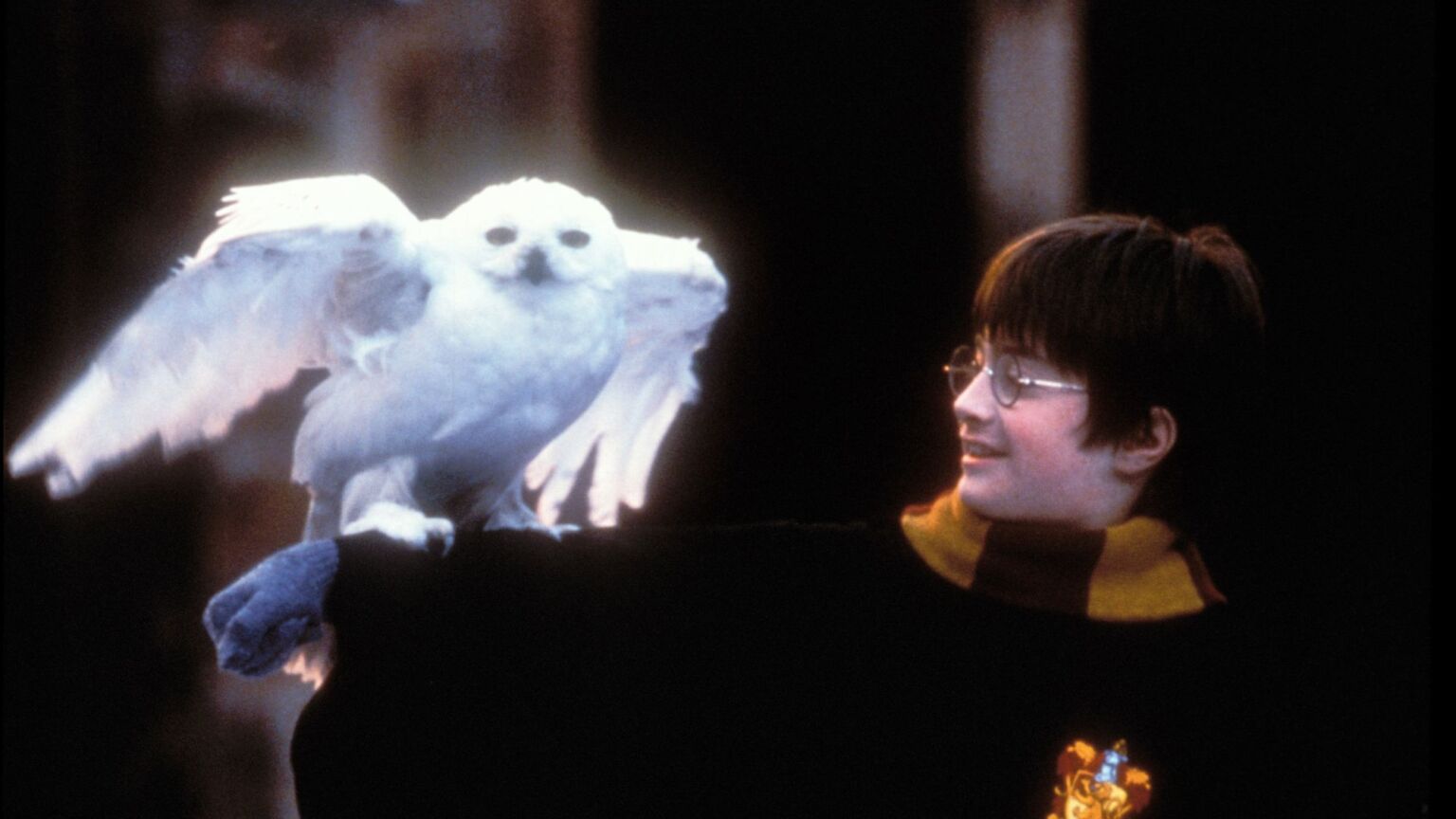
In case there’s anyone left on Planet Earth who’s not familiar with Harry Potter and the Philosopher’s Stone, it is about a boy who discovers he has magical powers, attends a magic school and fights against the evil wizard, Voldemort. He rides around on a broomstick and sneaks out of school in an invisibility cloak. Like all great works of children’s literature, it has enduring themes – friendship, courage and learning how to stand up for yourself. Quite why any of this is considered ‘outdated’ or in need of ‘deconstruction’ is a mystery.
Then there’s Glasgow’s dismissive line about ‘reading for pleasure’. This seems to capture the cold, antagonistic approach to books, and indeed the arts in general, that has become dominant in the modern university. Not every book needs to be enjoyed, of course. But loving books is a necessary step to understanding them, and to building that intimate acquaintance with an author’s mind – a person you will almost certainly never meet – which is both humbling and enlightening, and the real purpose of reading. Students who approach a book with hostility, conditioned to see nothing but racism, or classism, or sexism, are simply binding themselves to prejudices they profess to hate. Inevitably, they will end up as joyless, narrow-minded pedants.
It isn’t immediately clear what books are left for students to study that aren’t considered triggering. Before moralistic academics and administrators came for Harry Potter, they came for The Canterbury Tales, basically every play written by Shakespeare, and that most traumatising of texts, Peter Pan. Authors like Dickens have so far survived, but one suspects that this is only because his books are quite long, and so too much of a struggle for academics, let alone students, to get through.

Modern academics are proving to be no different from the puritans who sought to have the likes of DH Lawrence’s Lady Chatterley’s Lover banned on account of its portrayal of sex and class. ‘Is this a book you would even ask your wife or your servants to read?’, the prosecution famously asked in the novel’s obscenity trial in 1960. It is the same impulse that appears to drive the University of Glasgow’s morality police. At least in 1960, the great and good were asking those questions about adult masterpieces – not children’s fantasy novels.
After years of infantilising students and traducing all authors worth reading, universities have now reached the point where even children’s books are deemed unsafe. When Harry Potter can be cast beyond the pale, we are in a very dark place indeed.
Hugo Timms is an editorial assistant at spiked.
£1 a month for 3 months
You’ve hit your monthly free article limit.
Support spiked and get unlimited access.
Support spiked – £1 a month for 3 months
spiked is funded by readers like you. Only 0.1% of regular readers currently support us. If just 1% did, we could grow our team and step up the fight for free speech and democracy.
Become a spiked supporter and enjoy unlimited, ad-free access, bonus content and exclusive events – while helping to keep independent journalism alive.
———————————————————————————————————————————–
Exclusive January offer: join today for £1 a month for 3 months. Then £5 a month, cancel anytime.
———————————————————————————————————————————–
Monthly support makes the biggest difference. Thank you.





Comments
Want to join the conversation?
Only spiked supporters and patrons, who donate regularly to us, can comment on our articles.