How the ‘Blob’ crashed Britain’s economy
Liam Halligan on the risks of Rachel Reeves’s borrowing splurge and where the next financial crisis could come from.
Want unlimited, ad-free access? Become a spiked supporter.
Rachel Reeves delivered the budget from hell last week, shredding her manifesto promise not to raise taxes on ‘working people’ by instead hiking taxes to never-before-seen heights. The Office for Budget Responsibility (OBR) warned that in the coming years, growth would be slower, inflation would be steeper and even borrowing would be higher than previously forecasted. How has the UK got itself into this fiscal doom loop, where even huge tax hikes aren’t enough to cover ever-rising public spending? And how much responsibility should Reeves and the Labour government take for Britain’s deep economic malaise?
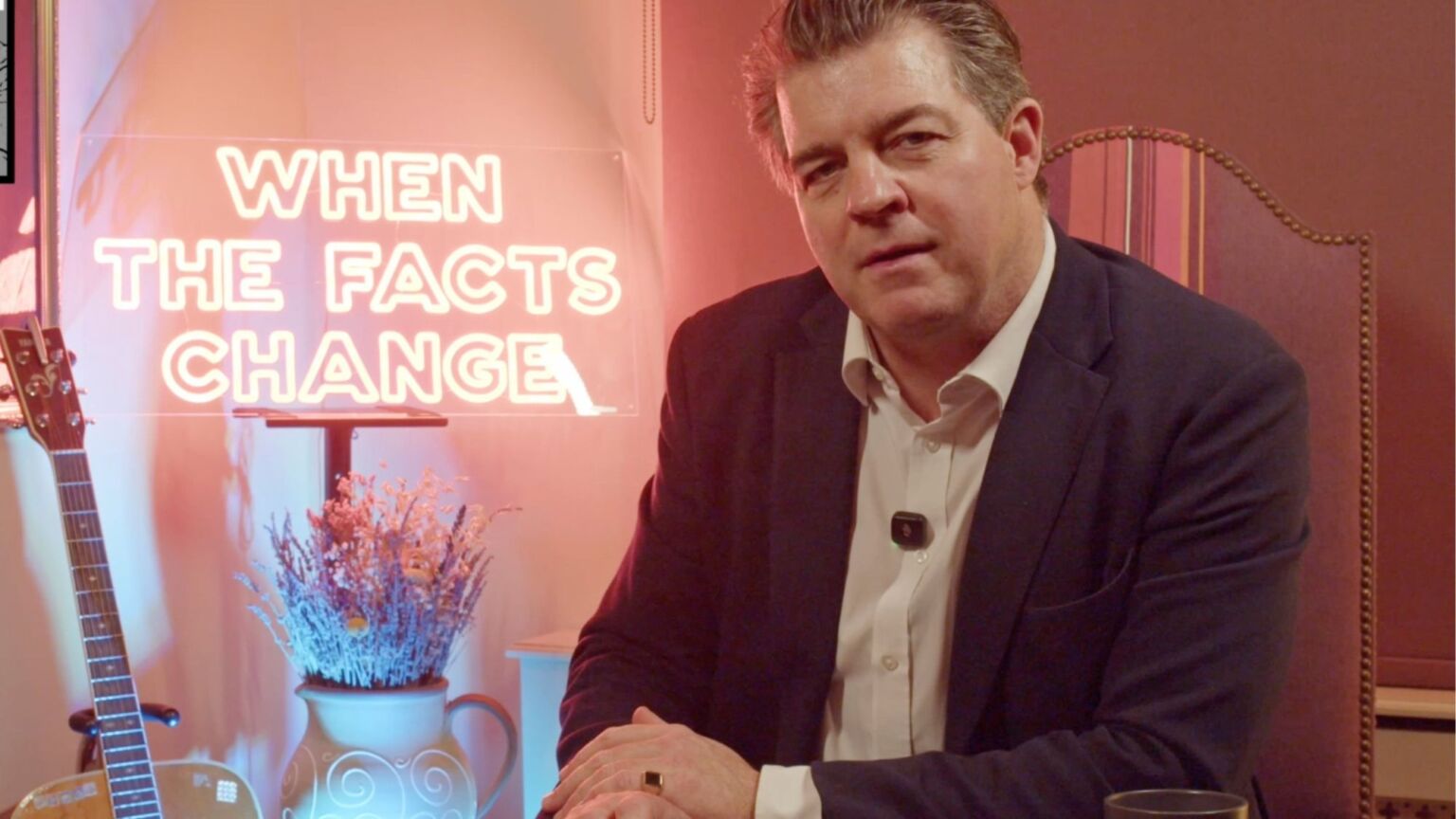
Liam Halligan – economist, Telegraph columnist and host of When the Facts Change – joined Fraser Myers for a special budget episode of the spiked podcast. What follows is an edited extract. Watch the full thing here.
Fraser Myers: Why is the UK’s economic outlook so bad – and has Rachel Reeves made things worse?
Liam Halligan: The first thing I’d say is that I believe in this country. I believe in the entrepreneurial vim and vigour of the British people, from all backgrounds. I’m from an immigrant family myself, and I suppose I carry the gratitude the immigrant class should have when coming to a great country. Britain has boundless potential. We have so much going for us – energy, creativity, a deep desire among households and firms to better themselves. Yet all of it is being thwarted by economic policy. And that’s not just Labour’s fault.
Rachel Reeves inherited a difficult situation in July 2024. Unlike 1997, Labour’s majority may look similar to Tony Blair’s but the mandate is completely different: only one in five voters backed Labour this time because turnout was so low. More importantly, when Blair came in, national debt was 35 per cent of GDP. When Reeves arrived, it was almost 90 per cent. The tax burden was already at a 70-year high after 14 years of Tory government.
But she has still made things worse. Labour promised light taxation in its manifesto, yet last October it delivered £40 billion of tax rises – the most punitive in over three decades – and another £30 billion this year. That’s a £70 billion increase, equivalent to 9p on the basic rate of income tax. Despite that, she has also massively ramped up borrowing. The OBR’s own documents show that since April, five-year borrowing projections have risen by another £70 billion.
I’ve been talking to people in the City, and the emerging fear is that all the pain in this budget has been pushed past the next election. For the next few years, we get the goodies, the extra borrowing, while all the fiscal consolidation and tax rises land in 2028 to 2030. According to the OBR, after years of huge borrowing, it suddenly falls in 2029 and 2030. How? Why? Growth assumptions are lower, borrowing is higher. It’s crazy. The economy can’t sustain that without borrowing even more.
Markets are calm for now, but long-term government borrowing costs have, for most of this year, been well above the levels they reached after the Liz Truss mini-budget. My worry is that, as the OBR’s borrowing forecasts inevitably get blown apart, markets will get jittery again. Reeves talks a good game on prudence, but this is a very left-wing front bench – and a very left-wing Parliamentary Labour Party.

The picture is this: lots of rhetoric about prudence, but huge risks being taken with borrowing that could easily trigger financial turmoil, especially if inflation rises. And that could happen. Meanwhile, the natural enterprise of the British people, which I deeply believe in, is being steadily corralled by government policy.
Myers: How have we ended up with such high levels of public spending alongside such terrible public services?
Halligan: A lot of public spending is going on the state itself – on the ‘Blob’. We have a third more civil servants than we had in 2016, which is absolutely insane. And despite this, public-sector productivity has plunged.
Working from home is often less efficient. It can work in some circumstances, particularly for people who want to stay home and look after children, but for many roles, it just doesn’t. Trying to get a state-run body or ministry to answer the phone, for example, is now extremely difficult.
Much of the money is going into public-sector wage rises, which have been substantial. Average public-sector pay is well above average private-sector pay. Public-sector workers also enjoy extensive benefits – sick leave, maternity leave, sabbaticals, entitlements and gold-plated, index-linked pensions that are completely unaffordable. Some workers receive pensions for more years than they actually work because their pension age is so low.
This system was built for a different time and demographic, and it desperately needs reform. Public-sector pensions are going to literally cripple the nation’s finances. Yet everyone deciding policy on public-sector pensions (ministers, officials, civil servants) has a public sector pension themselves, so there is little incentive for change. The rest of us need to recognise this ‘pensions apartheid’, because a third to a half of council tax can go towards public-sector pensions. That is why services like bin collection can suffer and why council tax can still rise at the same time.
On top of this, political parties – including Labour – tend to throw money at public services as an end in itself, without insisting on reforms. NHS waiting lists, for example, remain huge, even though more money is being poured in. Many people turn to private arrangements to access the healthcare they can no longer get from the NHS. This demonstrates the problem: endless state money is often treated as the end goal, rather than a means to achieve better outcomes.
Ultimately, what we need is proper reform of the state, including tackling entrenched vested interests. Without a national conversation on the size of the state and how public money is allocated, Britain’s public finances will continue to deteriorate. Our current level of borrowing and debt-interest payments is deeply unsustainable, and something has to give.
Myers: What problems are on the horizon that the government and the commentariat are ignoring?
Halligan: Right now inflation is 3.6 per cent, and we’re still an outlier in the G7 – almost double the Bank of England’s two per cent target. The Eurozone is bang on target. The US is lower, despite tariffs. Not that we can compare ourselves to America anyway – it has the reserve currency and a mighty national balance sheet.
So we have an inflation problem. We also have a slow growth problem. Markets can see that. And Reeves has loaded the balance sheet with huge extra borrowing without the early tax revenues or growth measures to justify it. The taxes come much later – if they ever come. So if inflation rises, all those concerns will flare up instantly.
Why might inflation rise? Well, the oil price is down 20 to 25 per cent this year – around $60 to $65 a barrel, historically low. But we are massive importers of oil, energy and food. And much of the current low oil price is due to a sluggish world economy and, crucially, a row inside OPEC. The big producers, the Saudis and others, are trying to force smaller members to stop cheating on quotas by deliberately keeping prices lower for now. Once that politics unwinds, OPEC can take prices back up. They still control 40 per cent of supply and 80 per cent of reserves. Anyone who says OPEC isn’t important doesn’t understand geopolitics.
Oil remains absolutely vital to inflation, especially for countries like ours with very expensive domestic energy. We are extremely vulnerable to a rise. If oil prices jump, UK inflation will jump. And once inflation looks ‘toppy’ again, this idea that the UK is an inflation outlier will harden in the markets. Shorting the UK will become ‘the trade’. That’s the danger. And my concern is that no one in Downing Street understands any of this.
Liam Halligan was talking to Fraser Myers on the spiked podcast. Watch the full episode below:
You’ve hit your monthly free article limit.
Support spiked and get unlimited access.
Support spiked and get unlimited access
spiked is funded by readers like you. Only 0.1% of regular readers currently support us. If just 1% did, we could grow our team and step up the fight for free speech and democracy.
Become a spiked supporter and enjoy unlimited, ad-free access, bonus content and exclusive events – while helping to keep independent journalism alive.
Monthly support makes the biggest difference. Thank you.




Comments
Want to join the conversation?
Only spiked supporters and patrons, who donate regularly to us, can comment on our articles.