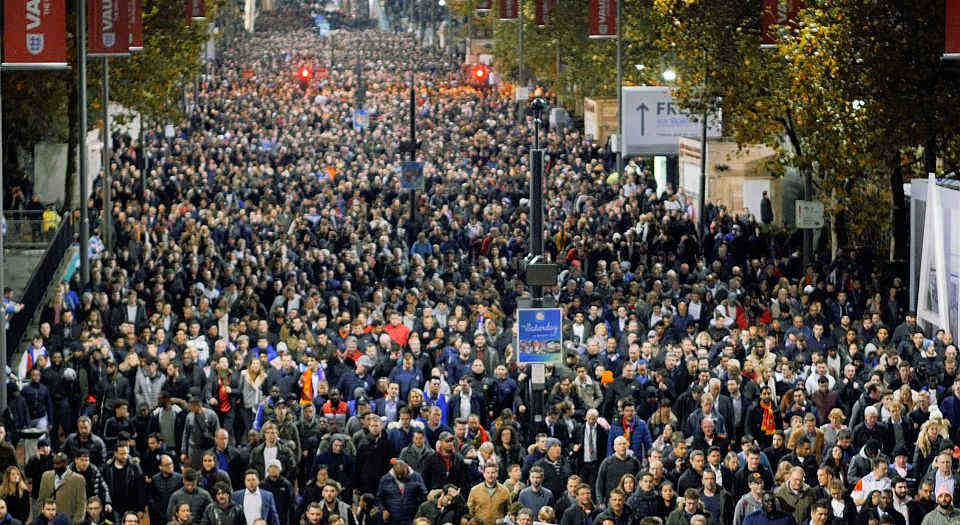
The greatest challenge of the twenty-first century will be exactly the same as the greatest challenge of all preceding centuries: how to find living space and housing for mass population movements in ways that are socially and environmentally sustainable. Both the scale and the speed of these movements now threatens former historical solutions to these problems such as the nation state and - much further back in time - the original division between country and city.
The fact that Britain has been relatively successful in accommodating these pressures while maintaining domestic stability is due to an almost continual process, dating back to 1870, of expanding home ownership by building ever outwards from urban cores in rings of suburban development. However, because the same process has resulted in the erosion of traditional hierarchical values and created a situation where people have unprecedented possibilities of constructing their own identities in terms not only of class, ethnicity, gender, nationality and sexuality, but also as fluid, multiple entities rather than unified subjects, the very foundations of the hegemonic Western system of representative democracy are now under threat. This scenario is as witnessed by falling electoral turnout and widespread indifference to the political classes.
Therefore, the specific challenge for government and governed alike is not to lose nerve and pursue illusory notions of security, but to welcome social change and work to build new forms of participatory democracy.
The problem is that British public policy appears to be heading in the opposite direction, towards coercive measures of containment and intensification in the name of ‘urban renaissance’. The lofty talk of restoring community values and public respect barely conceals the subtext of this agenda, which is to diminish home ownership, diminish consumption and, in short, put people back in their place. If the projected intensification of the London suburbs goes forward and people are forced through a combination of social legislation and financial pressure into confinement in small flats with no hope of a house with a garden and the attendant freedom and opportunity that goes with that, then social unrest will follow. In the attempts to contain this unrest, we will see an acceleration of current trends towards increased technological surveillance and information management, combined with clumsier measures such as compulsory voting and curfews.
Inevitably, people will defy planning law and move into the countryside to find green space in which to live: first as a trickle - a process already evidenced by the numbers illegally buying holiday caravans as permanent homes - and then in their masses. This moment will prove the crucial juncture in future British politics: it may allow people to establish their own new society through a collective act of rebellion or it may trigger harsh government action in defence of the countryside (and the neo-feudal estates of the super rich which will increasingly fill it following the end of agricultural subsidy and the forced retirement of rural land).
Yet however stringent the action taken, it will not force everyone back into the cities because the cities are simply no longer big enough to hold the population. Either we embrace sprawl and the social change it brings, or else those born today will grow up to experience a phenomenon unknown to many British generations before them: slums and shanty towns surrounding the boundaries of our overcrowded cities.
|